If your hair feels dry, frizzy, or breaks every time you brush it, you have probably heard that coconut oil for hair is the fix. Here is the honest version: it genuinely works for most people — and it’s one of the very few oils with real science behind it — but only if you use the right type, on the right hair, in the right way. Use it wrong and it can leave your hair stiff, greasy, or straw-like.
Coconut oil is special because it actually penetrates the hair strand and reduces protein loss — most oils just coat the surface. That makes it brilliant as a pre-wash treatment for dry, damaged, or color-treated hair. But fine hair and some low-porosity hair can find it heavy or drying, so patch a small section first and use virgin (unrefined) oil.
This guide keeps it simple and practical. You’ll learn exactly what coconut oil does inside your hair, who it helps most (and who should be careful), the best way to apply it step by step, which type to buy, and the mistakes that turn a good hair day into a greasy one. Let’s dive in.
What Coconut Oil Actually Does for Hair
Most oils sit on the outside of your hair, adding a bit of slip and shine. Coconut oil is different — and this is the whole reason it earns its reputation. Because of its main fatty acid, lauric acid, coconut oil has a small, straight molecule that can slip into the hair shaft rather than just coating it.
The most-cited hair study on this (Rele & Mohile, published in the Journal of Cosmetic Science) compared coconut, sunflower, and mineral oils. Coconut oil was the only one that reduced protein loss from hair — both when used before washing and after. Your hair is mostly protein (keratin), and every wash, brush, and blow-dry chips a little away. Less protein loss means less breakage, split ends, and that dry, brittle feeling.
Here’s the other clever part. When hair gets wet, it swells and the strand lifts and stretches. Repeated over months, this “hygral fatigue” weakens hair. A coconut oil layer applied before washing slows how much water rushes in, so your hair swells less and stays stronger.
So coconut oil does three real jobs: it penetrates and reduces protein loss, it protects against water damage during washing, and it smooths the surface for shine and less frizz. That’s a rare combination — and it’s why a cheap kitchen jar can outperform pricier “hair oils” that only coat.
The Real Benefits of Coconut Oil for Hair
Let’s set honest expectations. Coconut oil won’t make hair grow faster from the follicle — no oil does that directly. What it does is protect the hair you already have so less of it breaks off, which makes hair look longer, thicker, and healthier over time.
1. Less breakage and fewer split ends
By reducing protein loss and strengthening the strand, coconut oil helps hair resist snapping. If you constantly find broken bits on your shoulders or short “baby hairs” that are really breakage, a weekly pre-wash treatment can make a visible difference in a month.
2. Deep moisture and softness
Coconut oil is a superb emollient. It softens rough, dry lengths and makes hair easier to detangle. For thick, coarse, curly, or color-treated hair that drinks up moisture, it’s a weekly ritual worth keeping.
3. Smoother, shinier, less frizzy hair
A tiny amount smoothed over the mid-lengths and ends flattens the cuticle, so light reflects evenly. That’s instant shine and less frizz — especially useful in humidity.
4. A calmer, healthier scalp
Massaged into the scalp, coconut oil can soothe dryness and flaking, and its lauric acid has mild antimicrobial properties. Many people use it as a pre-wash scalp treatment for a comfortable, less-itchy scalp. (It is not a medical treatment for dandruff or scalp conditions — see a dermatologist for those.)
5. Protection from styling and the sun
A thin coat helps shield hair from some heat and UV stress and reduces chlorine and saltwater damage — apply before a swim and rinse after.
Coconut oil is a “protect what you have” oil, not a “grow new hair” oil. Reduce breakage, and your hair looks longer and fuller — that’s the real win.
People with dry, thick, coarse, curly, coily, or color-treated hair tend to love it. If your hair is fine, oily, or very low-porosity, read the next section before you slather it on.
The Honest Caution: Who Should Be Careful
Search “coconut oil ruined my hair” and you’ll find real complaints — stiff, dry, straw-like hair. It’s not a myth, and it’s avoidable once you understand why it happens.
Coconut oil reduces protein loss, which is great for most hair. But some hair is protein-sensitive — it already has plenty of protein and needs moisture instead. On that hair, coconut oil can tip the balance too far and leave it hard and brittle. This is common with low-porosity hair (a tight cuticle that oil sits on top of and builds up) and some fine hair.
How to stay safe
- Test one section first. Treat a small hidden section, wash, and see how it feels after it dries. Soft and smooth? Great. Stiff or straw-like? Coconut oil isn’t for your hair — try a lighter, non-penetrating oil like argan or jojoba.
- Use a little, not a lot. Fine hair needs a pea-sized amount on the ends only.
- Keep it off the roots if your hair gets greasy fast — focus on mid-lengths and ends.
- Balance with moisture. If hair feels dry after coconut oil, pair it with a hydrating, water-based conditioner or mask.
- Don’t overdo the frequency. Once or twice a week is plenty for most people.
Coconut is sometimes grouped with tree nuts for allergy labeling — if you have a nut allergy, check with your doctor first. This article is general hair-care education, not medical advice. For hair loss, a painful or flaking scalp, or a scalp condition, see a dermatologist. Read our full wellness disclaimer.
Best (and Worst) Hair Types for Coconut Oil
The same oil that rescues coarse curls can weigh down fine hair. Use this quick map to know where you stand.
| Hair type | Coconut oil verdict | How to use | Why |
|---|---|---|---|
| Thick / coarse / curly / coily | ✅ Excellent | Weekly pre-wash mask | Penetrates and softens; resists breakage |
| Color-treated or bleached | ✅ Great | Pre-wash + ends | Reduces protein loss on fragile hair |
| Dry / damaged | ✅ Great | Overnight or 30-min mask | Deep moisture and repair support |
| Fine / thin | ⚠️ With care | Tiny amount, ends only | Can weigh hair down or look greasy |
| Oily scalp | ⚠️ Lengths only | Keep off roots | Adds oil where you don’t need it |
| Low-porosity / protein-sensitive | ⚠️ Test first | Small section test | Can build up and feel stiff/straw-like |
Notice the pattern: thirstier, thicker, more damaged hair loves it; fine or protein-sensitive hair needs caution. Not sure which oil suits you? Try our 60-second coconut oil quiz or the use-case finder.
How to Use Coconut Oil on Hair (Step by Step)
The method matters more than the jar. The single best way to use coconut oil is as a pre-wash (pre-poo) treatment — here’s the full routine, plus lighter options.
The pre-wash mask (the gold standard)
- Scoop a small amount and warm it in your palms until it melts to a clear liquid.
- Apply to dry or slightly damp hair, focusing on the mid-lengths and ends. Add a little to the scalp only if it needs it.
- Comb through with a wide-tooth comb so it coats evenly.
- Leave it on for at least 30 minutes (a shower cap helps; body heat boosts penetration). Overnight is fine for very dry hair.
- Shampoo it out — you may need two gentle lathers — then condition as normal.
As an overnight deep treatment
- Apply a slightly heavier amount to lengths and ends (avoid a greasy scalp).
- Braid or twist hair, cover with a satin bonnet or an old pillowcase to protect bedding.
- Wash out thoroughly in the morning. Do this once a week for dry or damaged hair.
As a leave-in for shine and frizz (tiny amounts)
- Melt a rice-grain amount between your palms.
- Smooth over the ends of dry, styled hair to tame frizz and add shine.
- Less is everything here — too much looks wet and greasy.
Coconut oil penetrates best when it’s warm and your hair has time to absorb it. Warm the oil, apply, then add gentle heat (a shower cap, a warm towel, or just body heat under a bonnet) for 30+ minutes. That beats piling on more oil every time.
The Best Coconut Oil to Buy for Hair (Editor Pick + Comparison)
For hair, you want virgin (unrefined) coconut oil — cold-pressed, 100% pure, no added fragrance. Virgin oil keeps the natural compounds that help it penetrate; the refined and “fractionated” types are lighter but less ideal for a deep pre-wash mask. Here’s the exact jar our editors reach for.
Sky Organics Extra-Virgin Coconut Oil for Hair & Skin (16.9 fl oz)
BEST OVERALL
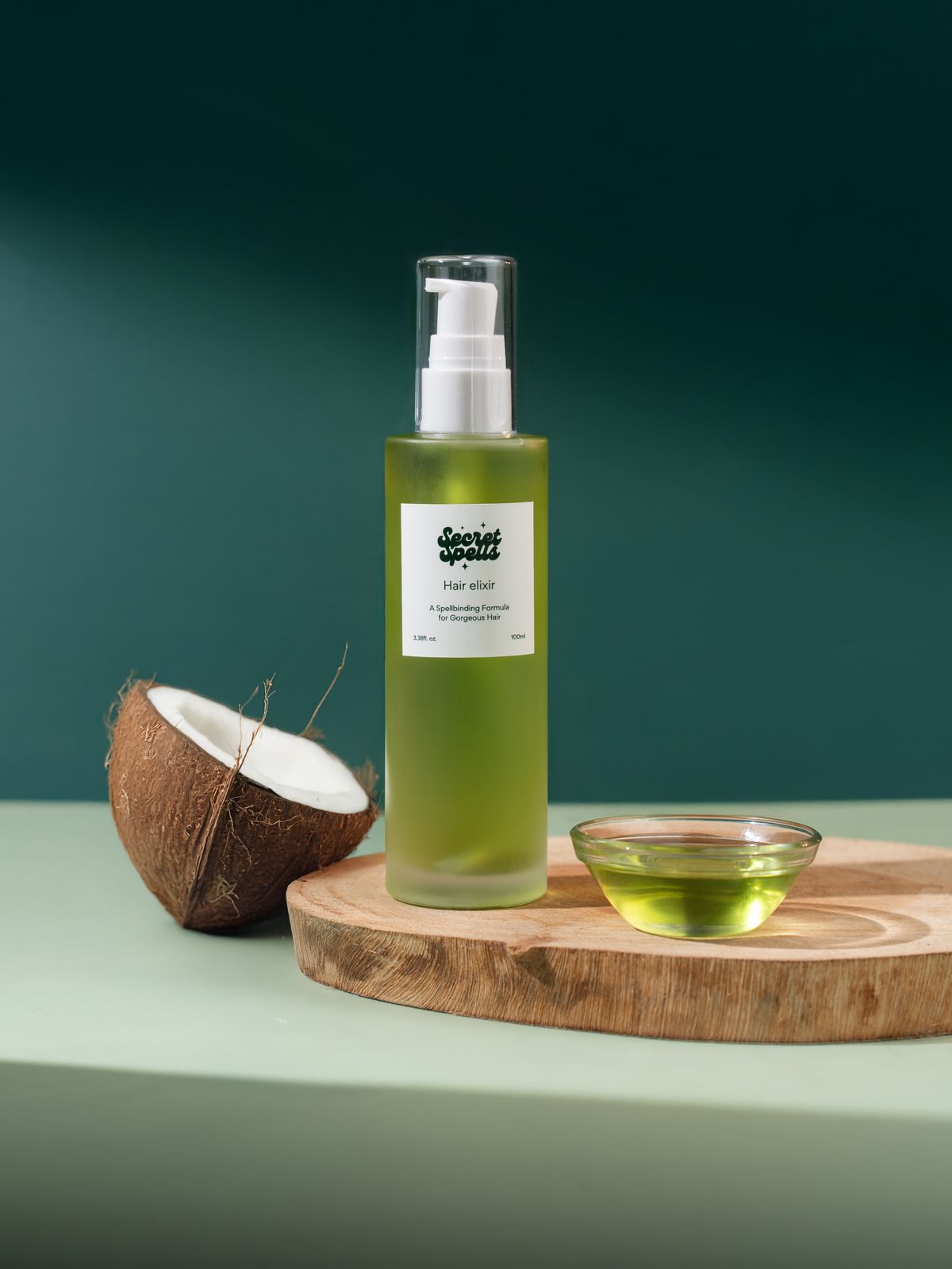
Why we picked it: This is a clean, USDA-organic, cold-pressed extra-virgin coconut oil — exactly the grade you want for a pre-wash hair mask. It’s unrefined, so it keeps the lauric acid that helps it penetrate the strand and cut protein loss. It doubles as a body moisturizer, so one jar covers hair and skin, and it’s vegan and cruelty-free.
- Type: Extra-virgin (unrefined)
- Size: 16.9 fl oz (500 ml)
- Purity: 100% pure, organic
- Process: Cold-pressed
- Best for: Pre-wash hair masks
- Also great for: Skin & body
- ✅ Unrefined & cold-pressed — penetrates the hair shaft
- ✅ Reduces protein loss — less breakage and split ends
- ✅ Deep moisture — softer, shinier, easier to detangle
- ✅ Multi-use — hair mask, scalp, skin, and body
- ✅ Vegan & cruelty-free, single ingredient
Check the latest price & reviews on Amazon. Price and availability can change.
Best for: anyone with dry, thick, curly, or color-treated hair who wants a proper weekly pre-wash mask that also works on skin.
🤝 Affiliate disclosure: As an Amazon Associate we earn from qualifying purchases. If you buy through our links, we may earn a small commission at no extra cost to you. We only recommend products we’d use ourselves.
Three great coconut oils for hair, compared
All three below are real, well-reviewed, and unrefined — the right grade for hair. Pick by your priority: overall quality, best value for a big jar, or lowest budget.
| Product | Best for | Size | Highlight | Buy |
|---|---|---|---|---|
| Sky Organics Extra-Virgin | Best overall for hair | 16.9 oz | USDA organic, cold-pressed, hair & skin | Check on Amazon |
| Nature’s Way Organic EV | Best value (big jar) | 32 oz | Trusted brand, non-GMO, great for frequent masks | Check on Amazon |
| Parachute 100% Pure Unrefined | Best budget / classic | Various | Iconic hair-oil brand, pure and unrefined | Check on Amazon |
If a full oil mask feels too heavy for everyday shine, a coconut-infused spray is easier. Palmer’s Coconut Oil Hair & Scalp Spray gives a light hit of moisture and shine without the greasy weight — nice for fine hair or between-wash days.
3 Easy DIY Coconut Oil Hair Masks
Boost your coconut oil with one or two kitchen extras. Always test a small section first, and wash out fully.
1. Coconut + Honey Moisture Mask (dry hair)
Mix 2 tablespoons melted coconut oil with 1 tablespoon honey. Apply to damp mid-lengths and ends, leave 30 minutes under a cap, then shampoo out. Honey is a humectant that pulls in moisture — great for dry, dull lengths.
2. Coconut + Rosemary Scalp Massage (thinning-worried)
Add 3–4 drops of rosemary essential oil to 2 tablespoons coconut oil. Massage into the scalp for a few minutes, leave 20–30 minutes, then wash. Rosemary oil is popular for scalp circulation; the massage itself feels great and stimulates the scalp.
3. Coconut + Banana Repair Mask (damaged hair)
Blend half a ripe banana with 1 tablespoon coconut oil until totally smooth (lumps are hard to rinse). Apply, leave 20 minutes, and rinse well. A rich, softening treat for brittle, over-processed hair.
Want more? Our DIY recipe generator builds hair, skin, and home recipes from coconut oil plus a few extras.
Common Mistakes With Coconut Oil on Hair (and Fixes)
Almost every “it didn’t work” story comes down to one of these.
- Mistake: Using too much.
✅ Fix: Start tiny — a pea-size for fine hair, up to a tablespoon for thick hair. Greasy, flat hair means you overdid it. - Mistake: Applying to the roots when your scalp is oily.
✅ Fix: Keep it on mid-lengths and ends; only oil the scalp if it’s dry. - Mistake: Skipping the section test.
✅ Fix: Test a hidden section first — protein-sensitive hair will feel stiff, and you’ll know to switch oils. - Mistake: Not washing it out fully.
✅ Fix: Two gentle shampoo lathers clear residue. Leftover oil looks greasy and attracts dirt. - Mistake: Using it as your only moisture step.
✅ Fix: Coconut oil seals and strengthens; pair it with a water-based conditioner for true hydration. - Mistake: Buying refined or scented oil.
✅ Fix: Choose 100% pure, unscented, virgin/unrefined oil.
That’s the protein-balance signal. Stop using coconut oil for a couple of weeks, do a hydrating (moisture) mask, and switch to a lighter oil like argan or jojoba for your hair type.
Pro Tips From Our Editors
- 💡 Pre-wash, not leave-in, for most hair. The biggest benefits come from applying before you shampoo.
- 💡 Add gentle heat. A shower cap or warm towel for 30 minutes helps the oil penetrate far better than more oil.
- 💡 Protect your pillow. A satin bonnet or pillowcase for overnight masks also reduces friction and breakage — a double win.
- 💡 Detangle with it. A little coconut oil on a wide-tooth comb makes wet-detangling gentler and reduces snapping.
- 💡 Before the pool or beach. Coat lengths with coconut oil first to cut chlorine and saltwater damage, then rinse after.
- 💡 Store it right. Keep the jar cool and sealed; virgin coconut oil lasts 18–24 months and should smell mild, not sharp.
Our test rule: treat coconut oil like a weekly repair session, not a daily styling product. Consistency, warmth, and small amounts beat heavy, everyday use every time.
Real-Life Examples (What People Actually Report)
Across TikTok, Reddit, and curly-hair forums, the pattern is remarkably consistent:
- “My curls drink it up.” Thick, curly, and coily hair users are the biggest fans — softer curls, less breakage, more shine from weekly pre-wash masks.
- “It saved my bleached ends.” Color-treated and bleached hair users report less snapping and healthier-looking lengths.
- “It made my fine hair stringy.” Fine and low-porosity hair users sometimes find it heavy or drying — the exact protein-balance issue we covered. Most fixed it by using far less, ends-only, or switching oils.
- “Best cheap pre-poo ever.” A near-universal win: a kitchen jar outperforming pricey hair oils as a pre-wash treatment.
The takeaway matches the science: fantastic for thick, dry, and damaged hair; use with care on fine or protein-sensitive hair.
Frequently Asked Questions
Does coconut oil make hair grow faster?
Not directly — no oil speeds up growth from the follicle. What coconut oil does is reduce breakage and protect the length you already have, so hair looks longer, thicker, and healthier over time. A scalp massage with it can also feel great and support a healthy scalp environment.
Can I leave coconut oil in my hair overnight?
Yes, for dry or damaged hair an overnight mask works well — apply to lengths and ends (not a greasy scalp), cover with a satin bonnet or old pillowcase, and wash out in the morning. For fine hair, 30 minutes is usually enough.
How often should I use coconut oil on my hair?
Once or twice a week as a pre-wash treatment is ideal for most people. Thick, coarse, or very dry hair can handle it weekly; fine hair may prefer every other week and only on the ends.
Why did coconut oil make my hair dry or stiff?
Some hair is protein-sensitive or low-porosity. Coconut oil reduces protein loss, which is usually good — but on that hair it can tip the moisture-protein balance too far, leaving it stiff. Use less, follow with a hydrating conditioner, or switch to a lighter oil like argan or jojoba.
What type of coconut oil is best for hair?
Virgin (unrefined), cold-pressed, 100% pure coconut oil with no added fragrance. Virgin oil keeps the compounds that help it penetrate the strand — better than refined or fractionated types for a deep pre-wash mask.
Can coconut oil help with dandruff?
It can soothe a dry, flaky scalp and has mild antimicrobial properties, and many people find it comforting. But it is not a medical treatment — persistent dandruff or a scalp condition should be seen by a dermatologist.
Your Quick-Start Checklist
- Choose virgin (unrefined), 100% pure coconut oil
- Test one hidden section first if your hair is fine or low-porosity
- Use it as a pre-wash mask — the biggest benefit
- Warm the oil and focus on mid-lengths and ends
- Add gentle heat for 30+ minutes (shower cap or bonnet)
- Use a small amount — pea-size for fine hair
- Wash out fully (two gentle lathers) and condition
- Repeat 1–2× a week; stop if hair feels stiff or dry
The Bottom Line
Coconut oil for hair is one of the rare “natural” remedies with genuine science behind it: it penetrates the strand, cuts protein loss, and shields hair from water damage. Treat it as a weekly pre-wash mask on dry, thick, curly, or color-treated hair and you’ll likely see less breakage and more shine within weeks. If your hair is fine or protein-sensitive, go light, test first, and don’t be afraid to switch oils.
Ready to try it? Our pick, Sky Organics Extra-Virgin Coconut Oil, is an easy, organic place to start — and it works on your skin too. Warm a little, mask tonight, and let your hair tell you the rest.
👉 Coconut oil for skin · Best coconut oil buying guide · Coconut oil pulling · Take the 60-second oil quiz