Can you really cook with coconut oil — and should you? From crispy stir-fries to fluffy baked goods and the best-ever stovetop popcorn, coconut oil is a versatile kitchen fat when you use the right type. This guide covers smoke points, refined vs virgin, exact substitution ratios, and the honest health picture, so you can cook with confidence.
Yes — coconut oil is great for cooking. Use refined coconut oil for high-heat frying, roasting, and sautéing (neutral taste, higher smoke point). Use virgin coconut oil for baking and lower-heat dishes where a light coconut flavor is welcome. Swap it 1:1 for butter or other oils, and enjoy it in moderation as part of a balanced diet.
Below you’ll find which type to buy for each job, a smoke-point table, foolproof substitution ratios, the best coconut oils for the kitchen, and answers to the health questions everyone asks. Let’s get cooking.
Can You Cook With Coconut Oil?
Absolutely. Coconut oil has been a cooking staple across South Asia, the Pacific, and the tropics for centuries. It’s mostly saturated fat, which makes it stable at heat and slow to go rancid — two genuinely useful traits in the kitchen. It adds richness to baked goods, crisps up roasted vegetables beautifully, and gives popcorn that unmistakable movie-theater aroma.
The key is choosing the right type for the heat and flavor you want. Refined coconut oil is neutral and handles high heat; virgin coconut oil carries a gentle coconut flavor and is best for baking and medium heat. Get the pairing right and coconut oil becomes one of the most reliable fats in your pantry.
It’s also solid at room temperature, which makes it handy for recipes that need a firm fat — think pie crusts, dairy-free “butter” spreads, and no-bake treats. New to coconut oil overall? Start with our best coconut oil buying guide to understand the grades.
Coconut Oil Smoke Points Explained
A fat’s smoke point is the temperature at which it starts to break down and smoke, producing off-flavors. Cooking below the smoke point keeps your food tasting clean. Here’s how coconut oil compares to other common fats.
| Fat | Approx. smoke point | Best cooking use |
|---|---|---|
| Refined coconut oil | ~400°F (204°C) | Frying, roasting, sautéing |
| Virgin coconut oil | ~350°F (177°C) | Baking, medium-heat sauté |
| Extra-virgin olive oil | ~375°F (191°C) | Sauté, dressings, finishing |
| Butter | ~350°F (177°C) | Baking, low-heat cooking |
| Avocado oil | ~520°F (271°C) | High-heat searing |
The takeaway: refined coconut oil comfortably handles most home frying and roasting, while virgin coconut oil is happiest in the oven and at medium heat. For a deep dive on how coconut stacks up against the Mediterranean favorite, see our coconut oil vs olive oil comparison.
Refined vs Virgin Coconut Oil for Cooking
This is the single most important choice for cooks. Both are pure coconut oil, but the processing changes the flavor and smoke point.
Refined — your high-heat workhorse
Refined coconut oil is filtered to remove the coconut taste and smell, and it has a higher smoke point (~400°F). Choose it when you want the food’s own flavor to shine — stir-fries, fried eggs, hash browns, roasted potatoes. Look for “expeller-pressed” and chemical-free refining.
Virgin — for baking and flavor
Virgin (unrefined) coconut oil keeps a light, pleasant coconut flavor and aroma. It’s wonderful in cookies, cakes, granola, curries, and anything tropical. Its smoke point is lower (~350°F), so keep the heat moderate. This is also the oil you’d use for skin, hair, and oil pulling, so it’s the more versatile jar to own.
Want no coconut taste and high heat? Refined. Baking or happy with a hint of coconut? Virgin. Many kitchens keep both: a refined tub by the stove and a virgin jar for baking and the rest of the house.
The Best Coconut Oil for Cooking
For everyday high-heat cooking, our top pick is a cleanly refined organic oil that stays neutral and dependable. Here’s the tub our editors keep next to the stovetop.
365 by Whole Foods Market Refined Coconut Oil
BEST FOR COOKING
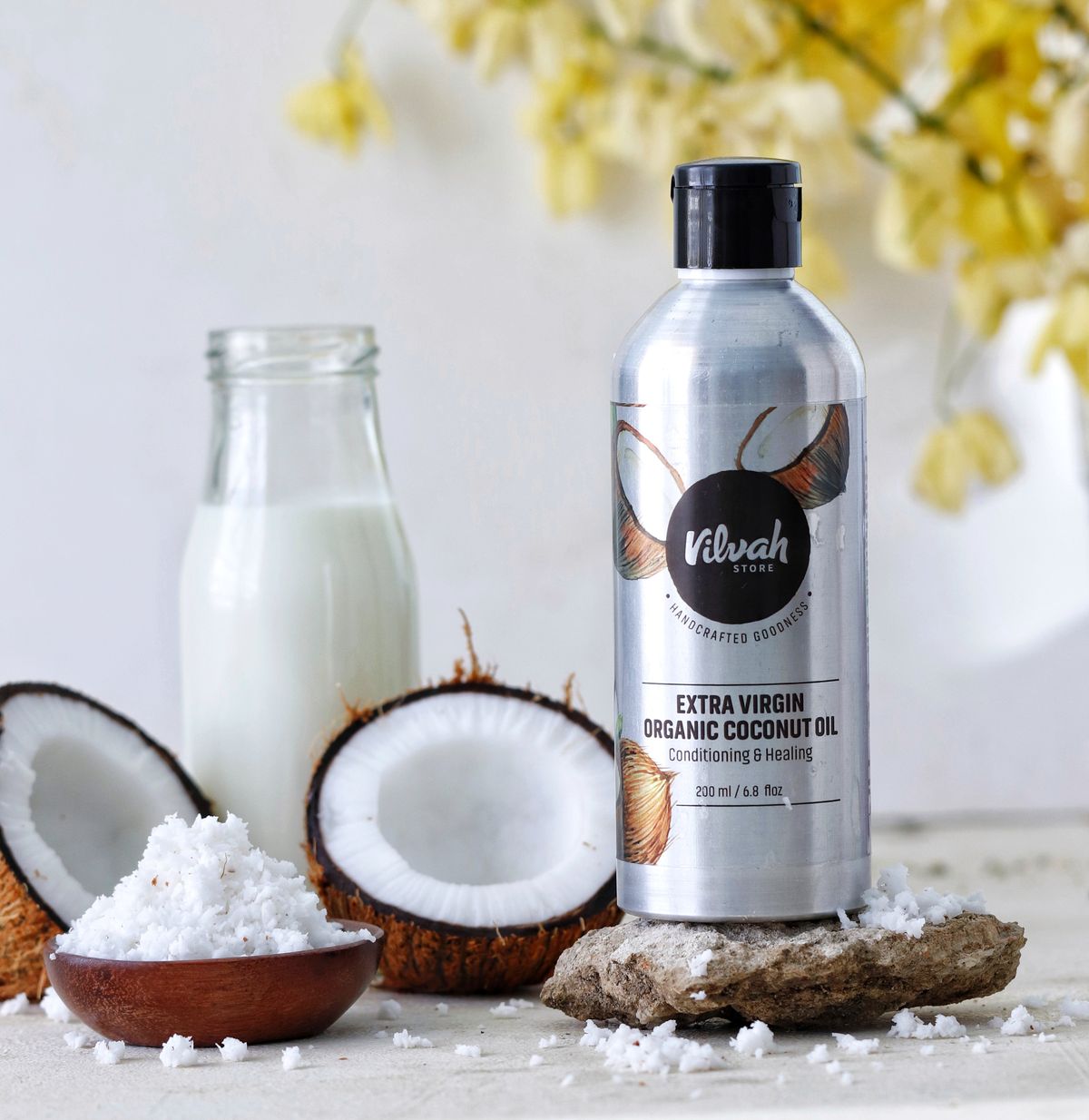
Why we picked it: This refined coconut oil is neutral in taste and smell with a smoke point around 400°F, so it’s ideal for frying, roasting, and sautéing without adding coconut flavor to savory food. It’s cleanly processed, reasonably priced, and comes in a big tub that lasts — a genuine kitchen workhorse from a trusted store brand.
- Type: Refined
- Smoke point: ~400°F (204°C)
- Taste: Neutral (no coconut)
- Best for: Frying, roasting, sauté
- Size: Large value tub
- Process: Expeller-pressed
- ✅ High smoke point — great for high-heat cooking
- ✅ Neutral flavor — won’t alter savory dishes
- ✅ Big value tub — everyday cooking staple
- ✅ Cleanly refined — expeller-pressed
- ✅ Trusted brand at a fair price
Check the latest price & reviews on Amazon. Price and availability can change.
Best for: cooks who fry, roast, and sauté often and want a neutral, dependable, budget-friendly oil.
🤝 Affiliate disclosure: As an Amazon Associate we earn from qualifying purchases. If you buy through our links, we may earn a small commission at no extra cost to you. We only recommend products we’d cook with ourselves.
Three coconut oils for the kitchen, compared
Pick refined for high heat, virgin for baking and flavor, or a big organic jar if you cook with it daily.
| Product | Best for | Type | Highlight | Buy |
|---|---|---|---|---|
| 365 Whole Foods Refined | High-heat cooking | Refined | Neutral taste, ~400°F | Check on Amazon |
| Nature’s Way Organic EV | Baking & flavor | Extra-virgin | Organic, mild coconut taste | Check on Amazon |
| NaturaleBio Organic Virgin | Daily cooks (big jar) | Raw virgin | Large jar, great value | Check on Amazon |
Best Ways to Cook With Coconut Oil
Coconut oil shines in some dishes more than others. Here are the uses our editors reach for most.
🍳 Frying & sautéing
Use refined oil for eggs, hash browns, stir-fries, and pan-frying. It gets hot without smoking and leaves food crisp, not greasy.
🔥 Roasting vegetables
Toss sweet potatoes, cauliflower, or Brussels sprouts in melted coconut oil before roasting for extra-crisp edges. Refined keeps it neutral; virgin adds a subtle sweetness that pairs well with squash and carrots.
🧁 Baking
Virgin coconut oil is a star in cookies, muffins, banana bread, and brownies, adding moisture and a hint of coconut. It’s also a popular dairy-free swap for butter.
🍿 Stovetop popcorn
This is the classic. Pop kernels in coconut oil for that authentic movie-theater flavor and aroma — a little virgin oil goes a long way.
🥘 Curries & tropical dishes
In Thai, Indian, and Caribbean cooking, virgin coconut oil’s flavor is a feature, not a bug. It deepens curries and dals beautifully.
Match the oil to the heat: refined for the frying pan, virgin for the mixing bowl. Get that right and coconut oil rarely disappoints.
Coconut Oil Substitution Ratios
One of coconut oil’s best kitchen tricks is how easily it replaces other fats. In almost every recipe, the swap is simple.
- Butter → coconut oil: 1:1 (use the same amount). Great for dairy-free baking.
- Vegetable/canola oil → coconut oil: 1:1. Melt it first if the recipe uses liquid oil.
- Olive oil → coconut oil: 1:1 for baking; for savory cooking, use refined to avoid clashing flavors.
- Shortening → coconut oil: 1:1. Coconut oil’s solid texture makes it an excellent shortening replacement.
Coconut oil is solid below ~76°F. In recipes that cream or mix at room temperature, warm your other ingredients (like eggs and milk) slightly so the melted coconut oil doesn’t re-solidify into little lumps when it hits something cold.
Is It Healthy to Cook With Coconut Oil?
This is where honesty matters. Coconut oil is about 90% saturated fat — more than butter or lard. Health authorities generally advise limiting saturated fat, so coconut oil is best enjoyed in moderation, as one fat among several, rather than your only cooking oil.
On the plus side, its stability at heat means it produces fewer harmful breakdown compounds than some polyunsaturated oils when fried hard, and many people love that a little goes a long way on flavor. The sensible approach: rotate coconut oil with heart-healthy options like olive oil, and don’t treat it as a “health food” that you can use limitlessly.
If you have high cholesterol or heart concerns, talk to your doctor about how much saturated fat suits you, and consider using coconut oil sparingly alongside unsaturated oils. This article is general education, not medical or dietary advice — see our wellness disclaimer.
Storing Coconut Oil in the Kitchen
Coconut oil is forgiving. Keep the tub in a cool, dark cupboard away from the stove’s heat, use a clean dry spoon, and it will happily last a year or more. Don’t worry when it shifts between solid and liquid with the seasons — both states are perfectly fine to cook with.
Common Cooking Mistakes (and Fixes)
- Using virgin oil for high-heat frying.
✅ Fix: Switch to refined for anything above medium heat to avoid smoking and off-flavors. - Expecting no coconut taste from virgin oil.
✅ Fix: Use refined when you want a neutral flavor in savory dishes. - Adding melted oil to cold batter.
✅ Fix: Bring cold ingredients to room temperature so the oil stays smooth. - Using too much.
✅ Fix: Coconut oil is rich; start with less than you think, especially for popcorn. - Treating it as unlimited “health food.”
✅ Fix: Enjoy in moderation and rotate with other oils.
Frequently Asked Questions
Is coconut oil good for frying?
Yes, especially refined coconut oil, which has a smoke point around 400°F. It fries eggs, vegetables, and stir-fries cleanly. For deep-frying at very high heat, an oil like avocado is even more heat-tolerant.
Does cooking with coconut oil make food taste like coconut?
Only virgin (unrefined) oil adds a light coconut flavor. Refined coconut oil is neutral and won’t change the taste of savory dishes.
Can I substitute coconut oil for butter?
Yes, at a 1:1 ratio in most recipes. It’s a popular dairy-free swap and works especially well in baking and for greasing pans.
Is coconut oil healthier than vegetable oil?
It’s more stable at heat, but it’s higher in saturated fat. Neither is a clear winner for everyone — variety is best. Use coconut oil in moderation alongside unsaturated oils.
What’s the best coconut oil for baking?
A good organic virgin coconut oil, like Nature’s Way Organic Extra-Virgin, adds moisture and a gentle coconut note that suits cookies, cakes, and quick breads.
Can coconut oil go bad?
Eventually, yes. Stored cool and dry it lasts a year or two. If it smells sour or sharp or tastes off, replace it — but that’s uncommon with proper storage.
Your Quick-Start Checklist
- Use refined for high-heat frying and roasting
- Use virgin for baking and flavor
- Stay below the smoke point for clean taste
- Swap 1:1 for butter or oil in most recipes
- Warm cold ingredients so the oil stays smooth
- Enjoy it in moderation, rotating with other oils
- Store it cool, dark, and sealed
The Bottom Line
Coconut oil earns its place in the kitchen when you use the right type: reach for refined coconut oil for high-heat frying and roasting, and a good organic virgin oil for baking and flavor. Swap it 1:1 for butter, mind the smoke point, and keep portions sensible. Do that and you’ll get crisp, flavorful results every time — without the guesswork.