
Reaching for a fat to bake, fry, or spread — should it be coconut oil or butter? Both are rich, solid-at-room-temperature fats that make food taste great, but they behave differently in the pan, in the oven, and in your diet. Here’s the honest, side-by-side comparison, with a clear winner for each job.
For flavor and classic baking, butter is hard to beat. For dairy-free cooking, higher-heat frying, and a plant-based option, coconut oil wins. Both are high in saturated fat, so enjoy either in moderation. You can usually swap them 1:1 — and many kitchens keep both.
Below we compare coconut oil and butter on nutrition, health, cooking and baking performance, taste, and price — then give you a simple “which to choose” guide and our top pick for each. Let’s settle it.
Coconut Oil vs Butter: At a Glance
Here’s the head-to-head summary before we dig into the details.
| Feature | 🥥 Coconut oil | 🧈 Butter |
|---|---|---|
| Source | Plant (coconut) | Dairy (cream) |
| Saturated fat | Very high (~90%) | High (~63%) |
| Dairy-free / vegan | ✅ Yes | ❌ No |
| Smoke point | ~350°F virgin / ~400°F refined | ~350°F (higher for ghee) |
| Flavor | Coconutty (virgin) / neutral (refined) | Rich, buttery |
| Best for | Dairy-free, frying, baking | Flavor, classic baking |
| Contains lactose | ❌ No | ✅ Trace |
Nutrition: How They Compare
Both are calorie-dense fats — coconut oil has about 120 calories per tablespoon, butter about 100 (butter contains a little water and milk solids). The bigger difference is what else they bring.
Coconut oil is almost pure fat, roughly 90% saturated, with no cholesterol and no dairy. Butter is about 63% saturated fat, contains dietary cholesterol, and brings small amounts of fat-soluble vitamins (A, E, K2) plus, in grass-fed versions, a bit more of some nutrients. Butter also contains trace lactose and milk proteins, which matters for dairy-sensitive folks.
Neither is a “health food,” but each fits a balanced diet used sensibly. If you’re comparing coconut oil to plant oils too, see our coconut oil vs olive oil guide.
Health & Heart: The Honest Picture
Here’s the balanced view: both coconut oil and butter are high in saturated fat, and major health guidelines recommend limiting saturated fat for heart health. So neither is a clear “heart-healthy” champion — that title goes to unsaturated oils like olive oil.
Coconut oil can raise both HDL (“good”) and LDL (“bad”) cholesterol; butter also raises LDL for many people. The practical takeaway is the same for both: use them in moderation, as part of a varied diet that leans on unsaturated fats for everyday cooking. Choosing between them is often more about diet (dairy-free vs not), flavor, and cooking needs than a big health gap.
Both coconut oil and butter are high in saturated fat. If you have high cholesterol or heart concerns, keep portions modest and favor unsaturated oils for daily cooking. This article is general education, not medical or dietary advice — see our wellness disclaimer and talk to your doctor.
Cooking & Frying
In the pan, the two behave differently — and the winner depends on the dish.
Where coconut oil wins
Refined coconut oil has a higher smoke point (~400°F) and a neutral taste, making it better for higher-heat frying and sautéing without burning or adding flavor. It’s also the obvious pick for anyone cooking dairy-free. See our full cooking with coconut oil guide.
Where butter wins
Butter brings unbeatable flavor for finishing vegetables, making sauces, and sautéing at moderate heat. Its one weakness is that the milk solids can brown and burn at higher temperatures — which is exactly why clarified butter or ghee (milk solids removed) is used for higher-heat cooking and has a higher smoke point.
High-heat frying / dairy-free → coconut oil (refined). Flavor, sauces, finishing → butter. High-heat + buttery taste → ghee. Many cooks keep all three.
Baking & Substitution
This is where a lot of people compare the two, and the good news is they swap easily. In most recipes you can replace butter with coconut oil (or vice versa) at a 1:1 ratio.
- Texture: butter creates tender, flaky results (think pastry and cookies) thanks to its water content and creaming ability. Coconut oil gives a moist crumb and sets firm when cool.
- Flavor: butter adds richness; virgin coconut oil adds a mild coconut note (use refined for a neutral taste).
- Dairy-free baking: coconut oil is a go-to butter replacement in vegan recipes.
- Tip: when a recipe calls for melted butter, melt the coconut oil too; when it calls for softened butter to cream, use solid (room-temperature) coconut oil.
Coconut oil re-solidifies when it hits something cold. In batters, bring eggs and milk to room temperature first so melted coconut oil blends smoothly instead of forming little lumps.
Taste & Texture
Flavor is often the deciding factor. Butter’s rich, creamy taste is iconic and hard to replicate — it’s why it rules toast, mashed potatoes, and classic bakes. Coconut oil is either subtly sweet and tropical (virgin) or flavor-neutral (refined). If you want that unmistakable buttery taste, butter wins; if you want dairy-free or a clean canvas, coconut oil wins. Texture-wise, both are solid at room temperature and melt beautifully, though butter spreads more softly straight from the fridge.
Our Top Picks: One of Each
The smartest move is to keep a good version of both. Here are the two our editors recommend — a clean coconut oil and a grass-fed ghee that gives you butter flavor with a higher smoke point.
Nature’s Way Organic Extra-Virgin Coconut Oil
TOP COCONUT
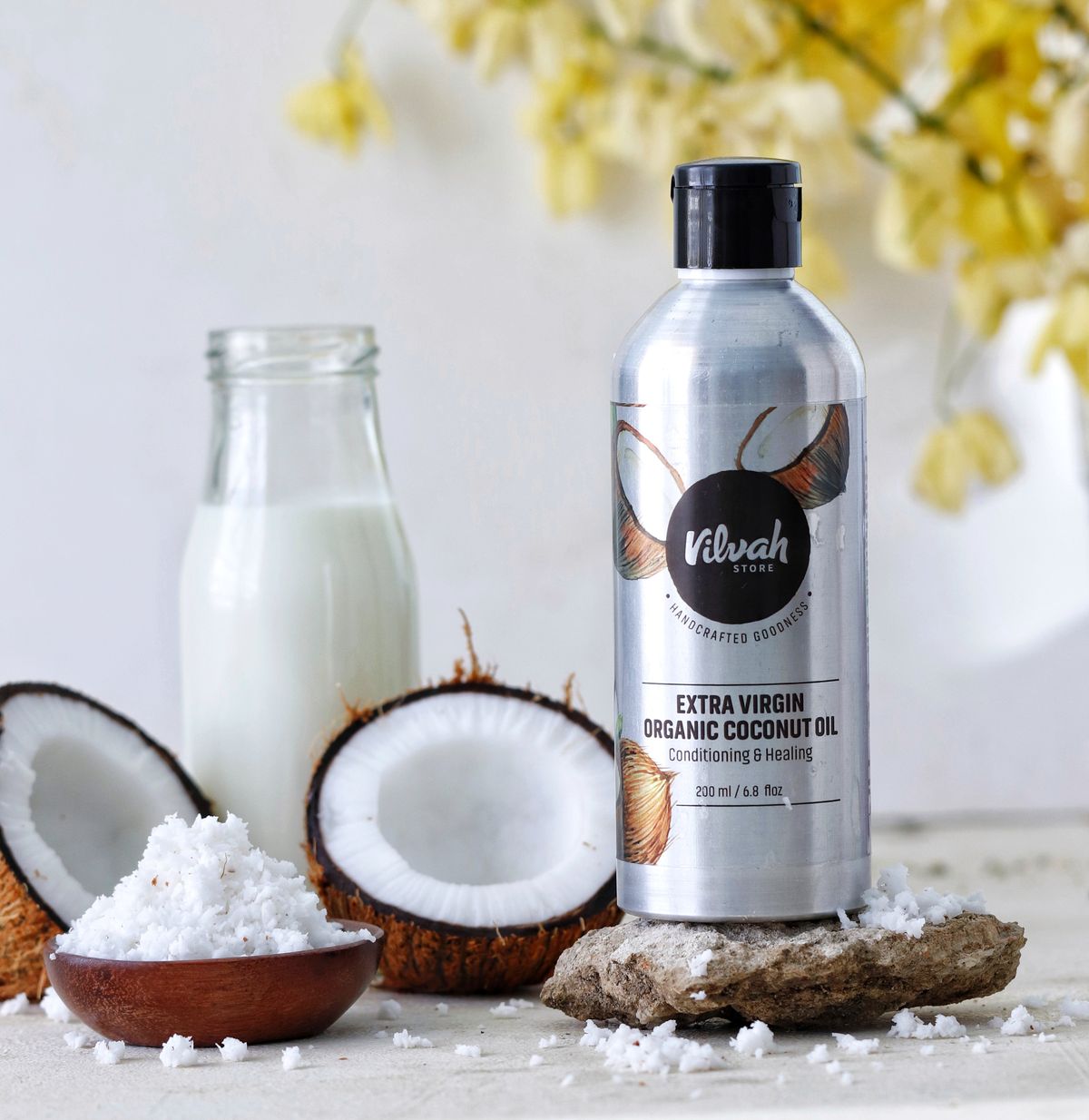
Why we picked it: A clean, USDA-organic, cold-pressed extra-virgin coconut oil — ideal as a 1:1 dairy-free butter swap in baking and great for moderate cooking. One big jar also covers skin and hair, so it earns its shelf space several times over.
- Type: Extra-virgin
- Best for: Dairy-free baking
- Purity: 100% organic
- Process: Cold-pressed
Check the latest price & reviews on Amazon.
4th & Heart Grass-Fed Ghee
TOP BUTTER
Why we picked it: Ghee is clarified butter with the milk solids removed, so it delivers rich, nutty butter flavor with a higher smoke point and no lactose — perfect for high-heat cooking where regular butter would burn. This pasture-raised, keto-friendly jar is a shelf-stable butter upgrade that pairs perfectly with your coconut oil.
- Type: Grass-fed ghee
- Best for: High-heat + butter flavor
- Lactose: Removed
- Diet: Keto-friendly
Check the latest price & reviews on Amazon.
🤝 Affiliate disclosure: As an Amazon Associate we earn from qualifying purchases. If you buy through our links, we may earn a small commission at no extra cost to you. We only recommend products we’d use ourselves.
Which Should You Choose?
Match the fat to your goal:
- Dairy-free or vegan → coconut oil, every time.
- Classic flavor & tender bakes → butter.
- High-heat frying → refined coconut oil or ghee.
- Buttery taste without the burn → ghee.
- One fat for kitchen + skin/hair → coconut oil (see 50+ uses).
- Everyday heart-conscious cooking → neither as your main fat; lean on olive oil and use these in moderation.
Price & Shelf Life
Coconut oil is the more shelf-stable of the two: an unopened jar lasts around two years at room temperature, and it doesn’t need refrigeration. Butter is perishable, keeps a few weeks to months refrigerated (longer frozen), and can pick up fridge odors. Ghee splits the difference — it’s shelf-stable for months thanks to the removed milk solids. On price, basic butter and coconut oil are broadly comparable; premium grass-fed butter and ghee sit at the higher end. For infrequent bakers, coconut oil’s long life is a practical plus.
Frequently Asked Questions
Is coconut oil healthier than butter?
Not clearly. Both are high in saturated fat. Coconut oil is dairy-free and cholesterol-free; butter contains cholesterol and trace dairy but adds flavor and some vitamins. For heart health, unsaturated oils like olive oil beat both — use coconut oil and butter in moderation.
Can I substitute coconut oil for butter in baking?
Yes, usually at a 1:1 ratio. Use melted coconut oil where melted butter is called for, and solid room-temperature coconut oil where softened butter is needed. Expect a moist crumb and, with virgin oil, a mild coconut note.
Which is better for frying?
Refined coconut oil (higher smoke point, neutral taste) or ghee handle high heat better than regular butter, whose milk solids can burn. For moderate-heat flavor, butter is lovely.
Does coconut oil taste like coconut in baking?
Virgin coconut oil adds a mild coconut flavor; refined coconut oil is neutral. Choose refined if you don’t want any coconut taste in your bakes.
Is coconut oil good for a dairy-free diet?
Yes — it’s plant-based, lactose-free, and the standard butter replacement in vegan and dairy-free baking and cooking.
What about ghee — is it butter or something else?
Ghee is clarified butter with the water and milk solids removed. That gives it a higher smoke point, no lactose, and a longer shelf life, while keeping a rich, nutty butter flavor.
The Verdict
There’s no single winner — there’s a winner for each job. Butter takes flavor and classic baking; coconut oil takes dairy-free cooking, higher-heat frying, and double-duty kitchen-and-beauty use. The best-stocked kitchens keep both, plus a jar of ghee for buttery high-heat cooking. Grab a clean organic virgin coconut oil and a grass-fed ghee, use each for what it does best, and enjoy both in moderation.