You’ve heard coconut oil is a natural skin miracle — but you’ve also heard it can trigger breakouts. So which is it? If you’re dealing with acne and wondering whether coconut oil for acne is a smart move or a mistake, this honest, dermatology-aware guide gives you the straight answer, explains why, and shows you exactly how (and where) to use it safely — or when to skip it entirely.
For most people with acne-prone or oily faces, coconut oil is risky. It’s highly comedogenic (pore-clogging), rated around 4 out of 5, so it can cause more breakouts. It does have antibacterial lauric acid that helps some people, and it’s gentler on body acne and dry skin types. Bottom line: patch test first, be cautious on the face, and consider a lighter oil if you’re acne-prone.
Below, you’ll learn why coconut oil clogs pores, the real evidence for its acne-fighting side, who it might help, who should avoid it, safer ways to use it, and better alternatives. No hype — just what actually protects your skin.
Does Coconut Oil Cause Acne?
For many acne-prone people, yes — it can. Acne forms when pores get blocked with oil and dead skin cells, trapping bacteria and causing inflammation. Coconut oil is a rich, heavy oil that sits on the skin’s surface, and its fatty acids can build up inside pores. On skin that already over-produces oil, that’s a recipe for clogged pores and new pimples.
This is why so many people report the same story: they tried coconut oil as a “natural” moisturizer or cleanser, and within a week or two their skin got worse — more blackheads, more whiteheads, more inflamed bumps, often along the jaw, cheeks, and forehead. That reaction is real, and it’s not your imagination; it’s the oil’s comedogenic nature (more on that below).
That said, “causes acne” isn’t universal. People with dry or normal skin often use coconut oil on their face with no breakouts at all. The key variables are your skin type, how oily your skin already is, and how much you use. If you’re on the oily/acne-prone end, the odds tilt against you.
Does Coconut Oil Help Acne?
Here’s the other side, honestly. Coconut oil’s main fat, lauric acid, has genuine antibacterial and anti-inflammatory properties. In lab studies, lauric acid has been shown to kill Cutibacterium acnes (the bacteria involved in acne) — in some tests more effectively than benzoyl peroxide. That’s the science behind the “coconut oil clears acne” claims.
The catch is a big one: those studies used isolated lauric acid, not a tub of whole coconut oil smeared on your face. Whole coconut oil brings the antibacterial lauric acid and all the pore-clogging fats together. So you can get the bacteria-fighting benefit and a clogged-pore problem at the same time — which is why results are so mixed.
Some people with mild breakouts, dry skin, or occasional body acne do find coconut oil calms redness and helps. But for moderate-to-severe facial acne, it’s not a reliable treatment, and it may set you back. The antibacterial angle is promising in theory but unpredictable in a whole-oil form.
Coconut oil is a paradox for acne: the lauric acid may fight the bacteria, while the heavy oil clogs the pores. That tug-of-war is why it helps some people and wrecks others.
The Comedogenic Problem, Explained Simply
“Comedogenic” is just a fancy word for pore-clogging. Oils and ingredients are often rated on a scale from 0 (won’t clog pores) to 5 (very likely to clog pores). Coconut oil sits high, around 4. For comparison, many oils recommended for acne-prone skin rate 0–2.
| Oil | Comedogenic rating | Acne-prone friendly? |
|---|---|---|
| Coconut oil | ~4 (high) | ⚠️ Risky on the face |
| Fractionated coconut oil | ~1–2 (lighter) | ✅ Better tolerated |
| Jojoba oil | ~2 | ✅ Popular for acne-prone |
| Argan oil | ~0 | ✅ Very low risk |
| Squalane | ~0 | ✅ Very low risk |
The rating isn’t a perfect science — everyone’s skin is different, and a “4” doesn’t guarantee a breakout for you. But if you’re acne-prone, a high comedogenic rating is a clear yellow flag that says “patch test carefully, and don’t slather this all over your face.”
Who Coconut Oil Might Actually Work For
Coconut oil isn’t off-limits for everyone. It tends to be safer and even helpful for:
- Dry or normal (non-oily) skin types who get the occasional pimple but don’t have a lot of excess oil.
- Body acne on the chest, back, or shoulders, where skin is thicker and less prone to facial-style clogging.
- People who tolerate it after a proper patch test — some skin genuinely does fine.
- Short-term, targeted use — like a dab to calm a dry, flaky patch rather than an all-over face oil.
If that’s you, coconut oil’s moisturizing and mild antibacterial qualities can be a plus. If your skin is oily and breaks out easily on the face, you’re in the “be very careful or skip it” group.
Face vs Body Acne: A Big Difference
This distinction matters more than most articles admit. Your facial skin has smaller, more reactive pores and, for acne-prone people, a lot of oil activity — exactly the conditions where coconut oil causes trouble. Your body skin (back, chest, shoulders) is thicker and often less reactive, so coconut oil is generally better tolerated there.
Many people who can’t use coconut oil on their face happily use it on the body as a moisturizer without new breakouts. So if you love coconut oil but your face rebels, moving it “south” is a smart compromise. For general body and skin care, see our coconut oil for skin guide.
Oily / acne-prone face → skip whole coconut oil or use a lighter alternative. Dry face, occasional pimple → patch test, use sparingly. Body acne → usually fine, but still patch test first.
How to Use Coconut Oil Safely (If You Want To Try)
If you’d still like to test coconut oil, do it the careful way to protect your skin.
- Patch test for 24–48 hours. Dab a little on your inner forearm or jawline and wait. If you see irritation or new bumps, stop.
- Use unrefined virgin oil, 100% pure with no additives — that’s the grade with the natural lauric acid.
- Start on the body, not the face, especially if you’re acne-prone.
- Use a thin layer, and remove it fully if you use it as a cleanser (double-cleanse so no oily film is left in pores).
- Give it 2 weeks and watch closely. If breakouts increase, it’s not for you — switch to a low-comedogenic oil.
Persistent, painful, or cystic acne needs real treatment, not a kitchen oil. This article is general education, not medical advice. If your acne is moderate to severe or not improving, see a dermatologist — proven options work far better than experimenting. Read our full wellness disclaimer.
Best Coconut Oils If You’re Acne-Prone
If you want the coconut benefits with less clogging risk, a fractionated coconut oil is the smarter pick — it’s lighter, non-greasy, and lower on the comedogenic scale than whole virgin oil. Here’s our editors’ choice for careful, acne-aware use.
Handcraft Blends Fractionated Coconut Oil
LIGHTEST OPTION
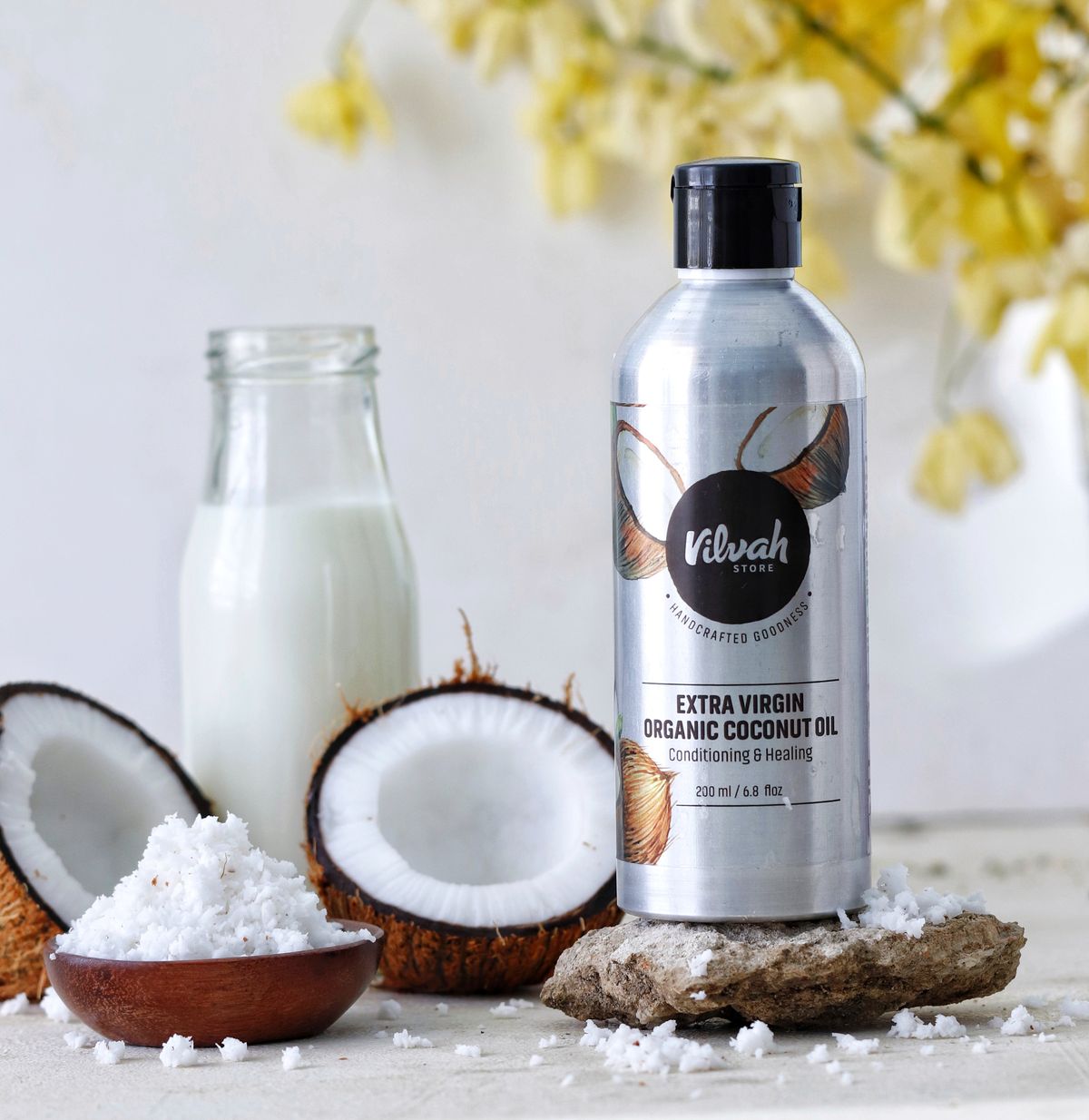
Why we picked it: Fractionated coconut oil has the pore-clogging long-chain fats removed, so it’s light, odorless, and far less greasy than whole virgin oil — and it rates much lower on the comedogenic scale. That makes it the more sensible way to enjoy a coconut-derived oil if your skin breaks out. It absorbs fast, works as a light moisturizer or a carrier for calming ingredients, and won’t leave a heavy film in your pores. Still patch test first.
- Type: Fractionated
- Feel: Light, non-greasy
- Comedogenic: Lower (~1–2)
- Best for: Careful skin use
- Scent: Odorless
- Shelf life: Very long
- ✅ Lighter & non-greasy — less pore-clogging
- ✅ Absorbs fast, no heavy film
- ✅ Odorless & pure — no additives
- ✅ Great carrier for calming oils
- ✅ Patch-test friendly starting point
Check the latest price & reviews on Amazon. Price and availability can change.
Best for: acne-prone or oily skin that still wants a light, coconut-derived oil — used carefully after a patch test.
🤝 Affiliate disclosure: As an Amazon Associate we earn from qualifying purchases. If you buy through our links, we may earn a small commission at no extra cost to you. We only recommend products we’d use ourselves.
Coconut oil options, matched to your skin
Pick a light fractionated oil if you’re acne-prone, or whole virgin oil only for the body or dry skin.
| Product | Best for | Type | Note | Buy |
|---|---|---|---|---|
| Handcraft Fractionated | Acne-prone / face | Fractionated | Lightest, lower comedogenic | Check on Amazon |
| Fractionated Coconut Oil (alt) | Massage & body | Fractionated | Non-greasy carrier oil | Check on Amazon |
| Nature’s Way Organic Virgin | Body only / dry skin | Extra-virgin | Higher comedogenic — body use | Check on Amazon |
Better Alternatives for Acne-Prone Skin
If your goal is clearer skin, some oils are simply safer bets than whole coconut oil. Low-comedogenic options that acne-prone people tend to tolerate well include jojoba oil (closest to skin’s natural oil), squalane (light and non-clogging), argan oil, and hemp seed oil. For coconut specifically, fractionated coconut oil is the lighter cousin.
And remember that proven acne treatments — like salicylic acid, benzoyl peroxide, adapalene, and a gentle non-comedogenic moisturizer — outperform any single oil for real acne. Oils can be a nice supporting player for hydration, but they’re not a substitute for a proper routine.
Coconut Oil for Acne Scars and Dark Marks
A common follow-up question: even if coconut oil is risky for active acne, can it help acne scars or the dark marks left behind? Here’s the honest picture. Coconut oil is a good moisturizer, and well-hydrated skin can look smoother and more even, so a little coconut oil may make marks appear slightly less noticeable over time. It also has mild anti-inflammatory properties that can calm lingering redness.
But be realistic: coconut oil cannot erase true scars. Deep, pitted, or raised acne scars are changes in the skin’s structure, and no oil rebuilds that. Flat brown or pink marks (called post-inflammatory hyperpigmentation) do fade on their own, and ingredients like vitamin C, niacinamide, azelaic acid, and daily sunscreen fade them far faster than coconut oil.
There’s also a catch specific to this concern: if you apply whole coconut oil to your face to “fade scars,” you risk causing new breakouts that leave more marks. So for facial scarring, skip the whole oil, protect the area with sunscreen, and use proven brightening ingredients. On the body, a light layer of coconut oil for general moisture is lower-risk. For overall skin care, see our coconut oil for skin guide.
Apply oil last, over a lighter moisturizer, so it seals rather than smothers. Use the “less is more” rule — one or two drops, not a scoop. Change your pillowcase often, since oils transfer and build up. Introduce one new product at a time so you can tell what helps or hurts. And always wear sunscreen — it does more for marks and overall skin than any oil. If a product stings, burns, or breaks you out, stop and simplify your routine.
Common Mistakes (and Fixes)
- Slathering whole coconut oil all over an oily face.
✅ Fix: Use a lighter oil, or limit coconut oil to the body. - Skipping the patch test.
✅ Fix: Always test 24–48 hours first; skin reactions take time to show. - Using it as a cleanser and not removing it fully.
✅ Fix: Double-cleanse so no oily residue stays in pores. - Expecting it to cure moderate or cystic acne.
✅ Fix: See a dermatologist for real acne; use oils only for hydration. - Giving up on skincare because “natural” failed.
✅ Fix: Switch to proven, low-comedogenic products.
Real-Life Examples (What People Report)
- “It broke me out in a week.” The most common oily/acne-prone story — clogged pores fast.
- “Fine on my body, terrible on my face.” A very frequent split — body tolerates it, face doesn’t.
- “My dry skin loved it, no breakouts.” Non-oily skin types often do well.
- “I switched to fractionated and it was much better.” The lighter version is a common fix.
A Simple, Acne-Friendly Routine (Where Oils Fit)
Oils are just one small piece of clear skin. If you’re acne-prone, the routine around them matters far more than any single product. Here’s a simple, dermatologist-friendly framework you can build on — and exactly where coconut or fractionated oil belongs (usually near the end, and sparingly).
- Cleanse (morning and night) with a gentle, non-comedogenic cleanser. If you wear makeup or sunscreen, double-cleanse at night so nothing clogs your pores overnight.
- Treat with a proven active suited to your acne — salicylic acid for blackheads and whiteheads, benzoyl peroxide for inflamed pimples, or a retinoid like adapalene at night. Introduce one at a time.
- Moisturize with a lightweight, non-comedogenic, oil-free or gel moisturizer. Hydrated skin actually breaks out less, so don’t skip this even if you’re oily.
- Seal (optional, sparingly) — this is the only spot an oil belongs for acne-prone skin. A drop of a light oil like fractionated coconut oil can lock in moisture on dry areas. Skip it on oily zones.
- Protect (every morning) with a broad-spectrum SPF 30+ sunscreen. This does more for marks and long-term skin health than any oil ever will.
Notice that whole coconut oil doesn’t really have a starring role here — and that’s the honest takeaway. It can play a tiny supporting part (a light seal on dry patches, or general body moisture), but the heavy lifting for acne comes from gentle cleansing, proven actives, a light moisturizer, and daily sunscreen. Keep it simple, be consistent, and give any routine 6–8 weeks before judging results.
Frequently Asked Questions
Is coconut oil good or bad for acne?
It’s mixed. Its lauric acid is antibacterial, but whole coconut oil is highly comedogenic (rated ~4) and often clogs pores on oily, acne-prone faces. It’s safer on dry skin and the body. Patch test and be cautious.
Can coconut oil clear acne overnight?
No. No oil clears acne overnight, and coconut oil can actually worsen breakouts for many people. Proven treatments and a consistent routine work far better.
Why does coconut oil break me out?
Because it’s comedogenic — its heavy fats build up in pores and trap oil and bacteria, especially on skin that already makes a lot of oil. That triggers new blackheads and pimples.
What coconut oil is best for acne-prone skin?
If you want a coconut-derived oil, choose a lighter fractionated coconut oil (lower comedogenic rating) and patch test. Whole virgin oil is better kept to the body or dry skin.
Can I use coconut oil on body acne?
Often yes — body skin is thicker and less reactive, so coconut oil is usually better tolerated there than on the face. Still patch test and watch for breakouts.
What oils are better than coconut oil for acne?
Low-comedogenic oils like jojoba, squalane, argan, and hemp seed oil are safer bets for acne-prone skin, alongside proven acne treatments.
Your Safe-Use Checklist
- Patch test 24–48 hours before any real use
- Prefer a lighter fractionated oil if acne-prone
- Keep whole coconut oil to the body or dry skin
- Use a thin layer; double-cleanse if used to cleanse
- Watch for 2 weeks; stop if breakouts rise
- Rely on proven treatments for real acne
- See a dermatologist for moderate or cystic acne
The Bottom Line
Coconut oil for acne is a genuine mixed bag. Its lauric acid can fight acne bacteria, but whole coconut oil is highly comedogenic and clogs pores for many oily, acne-prone people — so on the face, it’s risky. It’s gentler on dry skin and the body, where many people use it happily. If you want a coconut-derived oil with less clogging risk, reach for a lighter fractionated coconut oil, patch test, and watch your skin. For real acne, proven treatments and a dermatologist beat any oil.
👉 Coconut oil for skin · Fractionated coconut oil · Coconut oil benefits · Best coconut oil guide · 50+ ways to use it