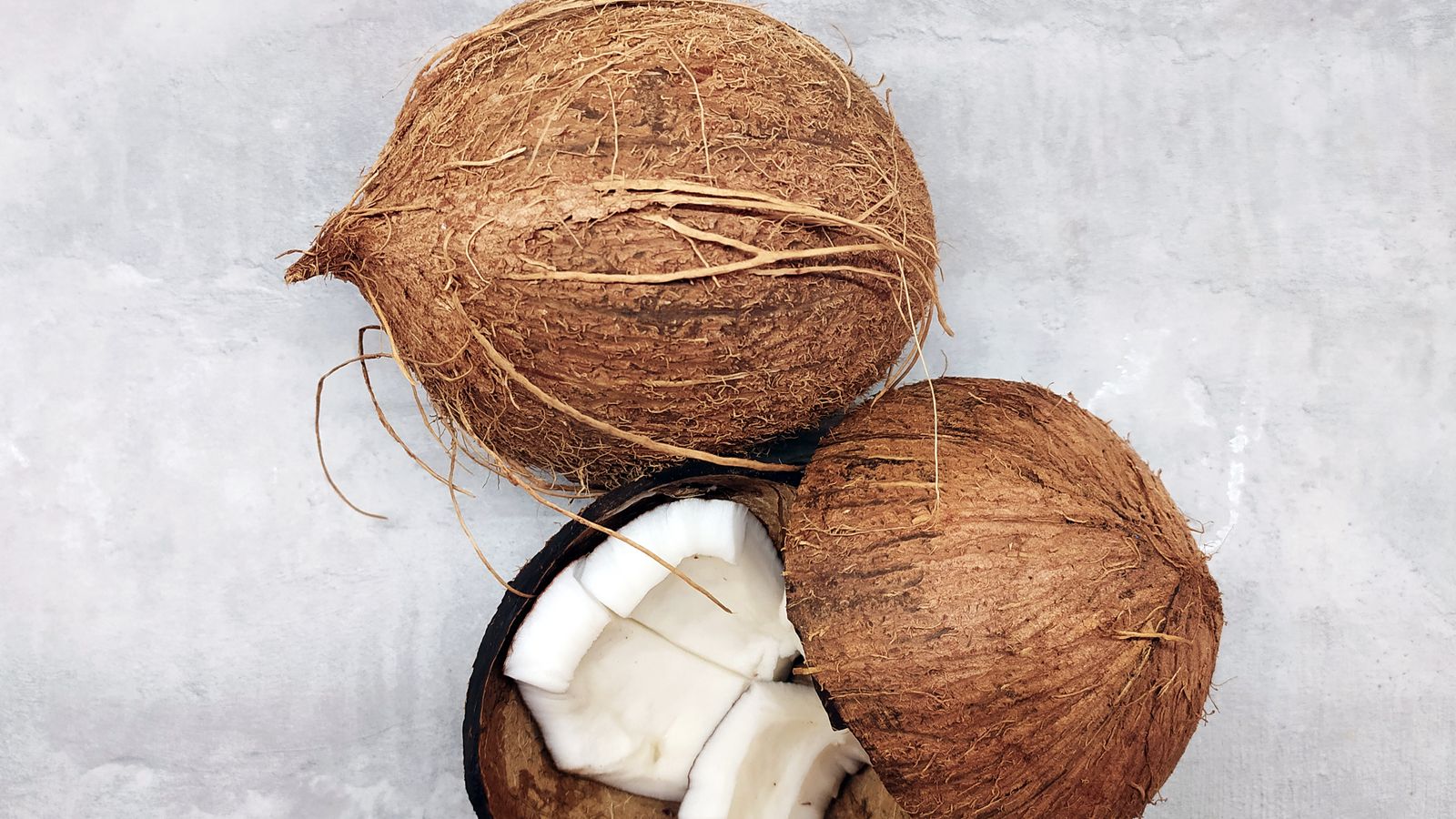
Everyone says coconut oil is good for you — but which claims are real, and which are just hype? Here’s the honest, up-to-date answer. This guide walks through the genuine benefits of coconut oil for your skin, hair, mouth, energy, and kitchen, tells you plainly where the science is strong and where it’s shaky, and shows you exactly how to get the most from a single jar.
Coconut oil has real, useful benefits — it’s a great moisturizer, a strong hair protector, a pleasant oil-pulling rinse, and a stable cooking fat. But it’s not a miracle cure, and it’s high in saturated fat, so it’s a helper, not a health food to use without limits. Choose unrefined virgin coconut oil for most benefits, and enjoy it in moderation.
Below, you’ll get the benefits grouped by area (skin, hair, mouth, energy, cooking), a clear-eyed look at the heart-health debate, two comparison tables, our top jar, and a simple plan to actually use it. No fluff — just what works and why.
What Makes Coconut Oil Special?
Coconut oil is the fat pressed from the meat of the coconut. What sets it apart from most other oils is its fat makeup. It’s about 90% saturated fat — far more than butter or olive oil — which is why it stays solid at room temperature and lasts a long time without going rancid. That stability is the root of several of its benefits.
Two fatty acids do most of the work. The first is lauric acid, which makes up roughly half of coconut oil and has natural antimicrobial properties (it can help fight certain bacteria and fungi). The second group is medium-chain triglycerides (MCTs) — shorter fats your body absorbs quickly and can burn for fast energy. Together, these explain why coconut oil behaves differently from a bottle of vegetable oil.
Here’s the key nuance most articles skip: the type of coconut oil changes the benefits. Virgin (unrefined) oil keeps the natural nutrients and mild coconut smell, and it’s best for skin, hair, and oral care. Refined oil is filtered and neutral, better for high-heat cooking. MCT oil is a concentrated liquid extract used for energy and coffee. So “the benefits of coconut oil” really depends on which jar you grab. New to the grades? Our best coconut oil buying guide breaks them down.
Benefits for Skin
This is one of coconut oil’s strongest and best-supported uses. Studies have found that virgin coconut oil moisturizes skin at least as well as mineral oil, and that it can improve the skin’s protective barrier. If you struggle with dry, flaky, or rough skin, a thin layer can leave it noticeably softer.
The lauric acid also gives it mild antibacterial and anti-inflammatory action, which is why some people with eczema or very dry patches find it soothing. Research on children with mild-to-moderate eczema has shown virgin coconut oil helped hydrate skin and reduce irritation better than a plain moisturizer in some cases.
Real-world uses people love: as a body moisturizer on damp skin after a shower, on cracked heels and elbows overnight, as a gentle eye-makeup remover, on cuticles, and as a soothing after-shave. It’s cheap and single-ingredient, which appeals to anyone avoiding long ingredient lists.
Coconut oil is comedogenic — it can clog pores for some people. If your skin is oily or acne-prone, be careful using it on your face. We cover this fully in our coconut oil for acne guide. For the body, it’s usually well tolerated. See our full coconut oil for skin routine.
Benefits for Hair
Coconut oil has a genuine, science-backed edge for hair that most oils don’t. Because its main fat (lauric acid) has a straight shape and low molecular weight, it can actually penetrate the hair shaft rather than just coating it. That matters because it helps reduce protein loss from your hair — both before and after washing — which keeps strands stronger and less prone to breakage.
In practice, that means a pre-wash treatment (applying coconut oil 30+ minutes before shampooing) can protect your hair from the swelling and damage that water and washing cause. People use it to tame frizz, add shine, smooth split ends, calm a dry scalp, and deep-condition dry or damaged lengths.
It won’t magically make hair grow faster — no oil does that directly — but by reducing breakage, it helps hair retain length and look healthier over time. Fine hair should use a small amount and focus on the ends to avoid greasiness. Full method in our coconut oil for hair guide.
Benefits for Your Mouth
Swishing coconut oil around your mouth — called oil pulling — is an old practice with some modern support. Small studies suggest it can reduce the bacteria and compounds behind bad breath and cut down on plaque, sometimes comparably to a mouthwash. The lauric acid’s antibacterial action plus the simple swishing motion do the work.
The honest framing: oil pulling is a bonus to brushing and flossing, not a replacement, and it won’t cure cavities or gum disease. But many people find their mouth feels remarkably clean afterward, and fresher breath is the most consistently reported benefit. Use unrefined virgin oil, swish 10–20 minutes, and spit it in the trash (never the sink). Full steps in our coconut oil pulling guide.
Energy & MCTs
Coconut oil is the richest natural food source of MCTs. These medium-chain fats are absorbed quickly and sent straight to the liver, where they can be used for fast energy or turned into ketones. That’s why coconut oil (and especially concentrated MCT oil) is popular for morning coffee, workouts, and keto diets.
Be realistic, though: plain coconut oil is only about 50–65% MCTs, and much of that is lauric acid, which behaves partly like a longer-chain fat. So for a real energy or keto effect, a purified MCT oil delivers far more per spoon. Some studies also link MCTs to a small increase in fullness, which may modestly help appetite control. We cover the specifics in our MCT oil guide and the honest weight angle in coconut oil and weight loss.
Cooking Benefits
In the kitchen, coconut oil’s saturated fat is actually a feature. Because saturated fats are stable, coconut oil resists breaking down and going rancid, and refined coconut oil handles medium-to-high heat well (a smoke point around 400°F). That makes it a dependable, shelf-stable cooking fat that lasts for months.
It also adds value beyond stability: virgin coconut oil brings a pleasant, mild sweetness to baking, granola, curries, and stovetop popcorn, and it’s a popular 1:1 dairy-free swap for butter. For high-heat frying with no coconut taste, choose refined. Learn what to use for each dish in our cooking with coconut oil guide, and see how it stacks up against other fats in coconut oil vs olive oil.
The smartest way to think about coconut oil: a genuinely useful multitasker for skin, hair, mouth, and cooking — used in sensible amounts — not a superfood you should pour on everything.
What the Science Really Says (The Honest Part)
Let’s be straight about the big debate: heart health. Coconut oil is very high in saturated fat, and reviews of the research show it raises LDL (“bad”) cholesterol more than unsaturated plant oils like olive or sunflower oil. It also tends to raise HDL (“good”) cholesterol. Major heart organizations recommend limiting saturated fat, so they advise using coconut oil sparingly rather than as your main cooking fat.
That doesn’t make coconut oil “bad.” It means the smart move is moderation and rotation — enjoy it for the things it does uniquely well (skin, hair, flavor, oil pulling), and lean on unsaturated oils like olive oil for everyday cooking, especially if you watch your cholesterol.
Many other popular claims — that coconut oil “boosts metabolism,” “burns belly fat,” “detoxes,” or “cures” conditions — are not well supported. The benefits that hold up are the practical, topical, and culinary ones. Here’s a quick honest scorecard.
| Claimed benefit | Evidence | Honest verdict |
|---|---|---|
| Moisturizes skin | Good (studies) | ✅ Real |
| Reduces hair protein loss | Good (studies) | ✅ Real |
| Freshens breath / cuts plaque | Moderate (small trials) | ✅ Likely, as a bonus |
| Fast energy from MCTs | Moderate | ✅ Small, better with pure MCT |
| “Boosts metabolism / burns fat” | Weak | ⚠️ Overstated |
| “Improves heart health” | Against | ❌ Raises LDL; use in moderation |
The jar you choose changes what you get. Match the type to the benefit you want.
| Type | Best benefits | Use it for |
|---|---|---|
| Virgin (unrefined) | Skin, hair, mouth, flavor | Moisturizing, hair masks, oil pulling, baking |
| Refined | High-heat cooking | Frying, roasting, neutral taste |
| MCT oil | Fast energy, keto | Coffee, smoothies, workouts |
| Fractionated | Light skin & hair | Massage, carrier oil, non-greasy moisturizing |
The Best Coconut Oil for Everyday Benefits
For most of the benefits above — skin, hair, oil pulling, and baking — you want a clean, organic virgin coconut oil. It keeps the natural lauric acid and nutrients, tastes mild, and works from head to toe. Here’s the jar our editors keep on hand.
Nature’s Way Organic Extra-Virgin Coconut Oil
BEST OVERALL
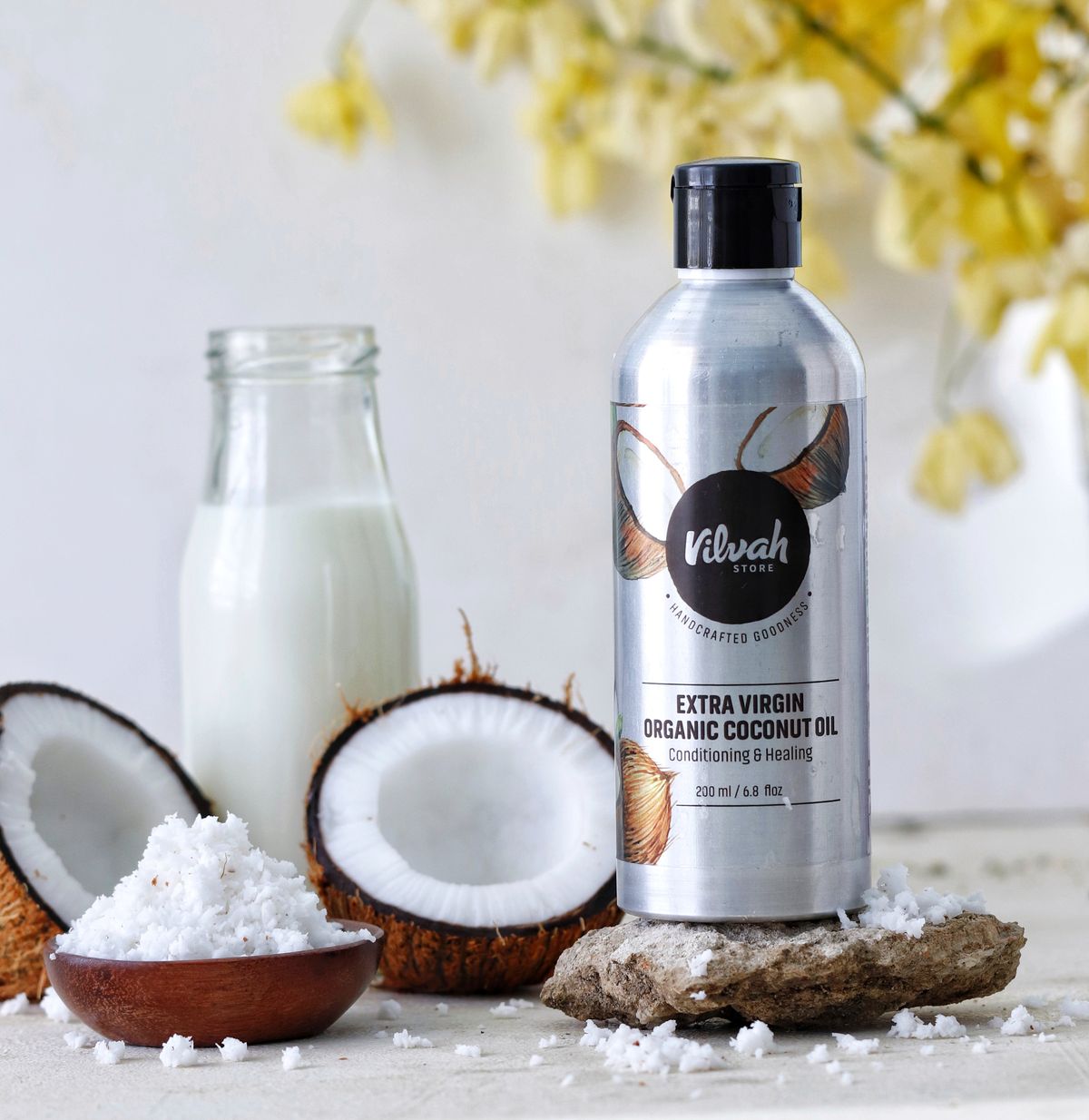
Why we picked it: This is a USDA-organic, cold-pressed extra-virgin coconut oil — exactly the unrefined grade that keeps the lauric acid and nutrients behind coconut oil’s real benefits. It’s mild, pure, and single-ingredient, so one big jar covers moisturizing, hair masks, oil pulling, and baking. Great value, and it lasts for months.
- Type: Extra-virgin (unrefined)
- Size: 32 fl oz value jar
- Purity: 100% pure, organic
- Process: Cold-pressed, non-GMO
- Best for: Skin, hair, mouth, baking
- Certifications: USDA Organic
- ✅ Unrefined & organic — keeps natural lauric acid
- ✅ Head-to-toe multitasker — body, hair, kitchen
- ✅ Mild, pleasant taste and smell
- ✅ Big value jar — lasts for months
- ✅ Single ingredient, non-GMO, cold-pressed
Check the latest price & reviews on Amazon. Price and availability can change.
Best for: anyone who wants one clean, organic jar to enjoy coconut oil’s real skin, hair, mouth, and kitchen benefits.
🤝 Affiliate disclosure: As an Amazon Associate we earn from qualifying purchases. If you buy through our links, we may earn a small commission at no extra cost to you. We only recommend products we’d use ourselves.
Three coconut oils, matched to the benefit you want
Pick a virgin oil for everyday benefits, a big organic jar for heavy users, or an MCT oil if energy is your goal.
| Product | Best for | Type | Highlight | Buy |
|---|---|---|---|---|
| Nature’s Way Organic EV | All-round benefits | Extra-virgin | Clean, organic, do-it-all | Check on Amazon |
| NaturaleBio Organic Virgin | Heavy daily users | Raw virgin | Big-jar value | Check on Amazon |
| Nutiva Organic MCT Oil | Energy & coffee | C8 MCT | Fast, clean energy | Check on Amazon |
How to Actually Get the Benefits
Owning coconut oil isn’t the same as benefiting from it. Here’s a simple, real-world plan to put each benefit to work without overdoing it.
- Skin: after showering, warm a pea-sized amount and smooth it onto damp skin. Focus on dry areas. Skip the face if you’re acne-prone.
- Hair: once or twice a week, work a small amount through the mid-lengths and ends 30 minutes before you shampoo, then wash as normal.
- Mouth: swish a tablespoon for 10–20 minutes in the morning, spit into the trash, rinse, then brush.
- Energy: blend a teaspoon of MCT oil (not a big scoop of coconut oil) into coffee or a smoothie; start small to avoid stomach upset.
- Cooking: use refined for high heat, virgin for baking; swap it 1:1 for butter, and keep portions sensible.
Start small everywhere — a little coconut oil goes a long way, and too much just feels greasy. Use a clean, dry spoon to keep the jar fresh. Warm it in your hands before applying to skin or hair so it melts and spreads evenly. And store it cool and dark so it stays fresh for months.
Who Benefits Most — and Who Should Be Careful
Coconut oil’s benefits shine brightest for people with dry skin, dry or damaged hair, morning breath, or a love of natural single-ingredient products. If that’s you, a jar earns its place fast.
Be more careful if you have acne-prone or very oily skin (it can clog facial pores), high cholesterol or heart concerns (limit how much you eat and favor unsaturated oils), or a coconut allergy (avoid it). And remember: for babies, pets, or any medical condition, check with a professional first — see our coconut oil for babies and coconut oil for dogs guides for the safe approach.
Common Mistakes (and Easy Fixes)
- Treating it as unlimited “health food.”
✅ Fix: It’s high in saturated fat — enjoy edible amounts in moderation and rotate with olive oil. - Using too much on skin or hair.
✅ Fix: Start pea-sized; build up only if needed. Excess just sits greasy. - Putting it on an acne-prone face.
✅ Fix: Patch test, use on the body instead, or choose a lighter oil. - Expecting metabolism “boosts” or fat burning.
✅ Fix: Ignore the hype; rely on overall diet and the proven topical benefits. - Buying refined for skin, hair, or pulling.
✅ Fix: Use unrefined virgin for the body; save refined for high-heat cooking.
Real-Life Examples (What People Report)
- “My dry shins finally stopped flaking.” A nightly thin layer is a common win for stubborn dry patches.
- “My hair feels stronger since I started pre-wash oiling.” Less breakage over weeks is the headline hair benefit.
- “My morning breath is noticeably better.” The most consistent oil-pulling review.
- “It’s the only moisturizer with one ingredient I can pronounce.” Simplicity keeps people loyal.
How to Choose and Store It for Maximum Benefit
You’ll only get coconut oil’s benefits if you buy the right jar and keep it fresh. Marketing on the front can be misleading, so flip the jar over and read the back. These are the words that actually matter.
- “Virgin” or “extra-virgin”: means unrefined, from fresh coconut — this is what keeps the lauric acid and nutrients. Best for skin, hair, and oil pulling.
- “Cold-pressed”: pressed without high heat, which better preserves the natural goodness.
- “Organic” and “non-GMO”: third-party assurance of cleaner sourcing — an easy upgrade for something you eat and put on your skin.
- “Refined” / “expeller-pressed”: neutral and higher smoke point — choose this only for high-heat cooking, not for the body.
- Avoid: “hydrogenated,” “partially hydrogenated,” or added flavors and fillers. You want a single ingredient.
Storage is refreshingly simple. Coconut oil is naturally shelf-stable thanks to its saturated fat, so an unopened jar often lasts around two years. Keep it in a cool, dark cupboard away from the stove, screw the lid on tight, and always dip in with a clean, dry spoon — water and food crumbs are what cause it to spoil. Don’t worry when it turns from solid to liquid and back with the seasons; that’s normal (it melts above about 76°F) and doesn’t harm the oil or its benefits. If it ever smells sharp or sour, or looks chunky and yellow, it’s time to replace it — but with good storage, that’s rare.
Many households keep a big virgin jar for skin, hair, mouth, and baking, plus a small refined tub by the stove for high-heat cooking. That way you always match the right type to the right benefit — and neither jar goes to waste.
Frequently Asked Questions
What are the main benefits of coconut oil?
The best-supported benefits are moisturizing skin, reducing hair protein loss and breakage, freshening breath and cutting plaque through oil pulling, providing fast MCT energy, and serving as a stable cooking fat. Enjoy them in moderation.
Is coconut oil actually good for you?
For skin, hair, mouth, and flavor, yes. For heart health, it’s high in saturated fat and raises LDL cholesterol, so use it in moderation and lean on unsaturated oils like olive oil for daily cooking.
Which coconut oil has the most benefits?
Unrefined organic virgin coconut oil, because it keeps the natural lauric acid and nutrients. Choose refined only for high-heat cooking and MCT oil specifically for energy.
Can I eat coconut oil every day?
A small daily amount can fit a balanced diet, but keep portions modest because of the saturated fat. If you have high cholesterol, talk to your doctor about how much is right for you.
Does coconut oil help you lose weight?
Not on its own. MCTs may modestly increase fullness, but coconut oil is calorie-dense and not a fat-burner. See our honest weight-loss guide.
Is coconut oil good for your face?
It’s a great moisturizer for many, but it’s comedogenic and can clog pores for oily or acne-prone skin. Patch test first, or use it on the body — details in our acne guide.
Your Coconut Oil Benefits Checklist
- Choose unrefined, organic virgin for most benefits
- Moisturize body skin on damp skin (skip acne-prone face)
- Pre-wash hair mask once or twice a week
- Oil pull 10–20 minutes for fresher breath
- Use MCT oil for real energy, not big scoops of coconut oil
- Cook with refined for high heat, virgin for baking
- Eat it in moderation; rotate with olive oil
- Start small, store cool, and use a clean spoon
The Bottom Line
Coconut oil’s benefits are real where it counts: it’s an excellent moisturizer, a genuine hair protector, a pleasant breath-freshening rinse, a fast MCT energy source, and a stable, tasty cooking fat. It is not a heart-health hero or a fat-burning miracle — it’s high in saturated fat, so use it in sensible amounts. Grab a clean organic virgin jar like Nature’s Way Organic Extra-Virgin Coconut Oil, put the head-to-toe uses to work, and enjoy the benefits that actually hold up.
👉 Best coconut oil buying guide · For skin · For hair · Oil pulling · MCT oil guide · 50+ ways to use it