Worried about your cholesterol and wondering where coconut oil fits in? You’ve probably heard it called a “superfood” — and also heard warnings that it’s packed with saturated fat. Both things can be true, and that’s confusing. This honest, easy-to-read guide cuts through the noise on coconut oil and cholesterol, explains what the science actually says, and helps you make a smart, heart-friendly choice — without the hype.
Coconut oil is high in saturated fat, and it can raise your cholesterol — including “bad” LDL. It may also raise “good” HDL, but most major heart health groups still advise limiting it. It is not a proven heart-health miracle. Enjoy it in small amounts for flavor, but don’t rely on it to lower cholesterol. For your heart, oils like olive oil are the safer everyday choice.
Below you’ll get the plain-English science, how coconut oil compares to other fats, who should be careful, and how to use it sensibly. Let’s clear up the confusion.
This article is general information, not medical advice. Cholesterol and heart health are personal and complex. Talk to your doctor before making diet changes based on cholesterol — especially if you have heart disease, high cholesterol, diabetes, or take medication. Your doctor can look at your full picture and give advice that’s right for you.
💡 Image suggestion: a spread of heart-healthy foods (olive oil, nuts, avocado, oily fish) with a small jar of coconut oil. Alt text: “Coconut oil among heart-healthy foods, illustrating cholesterol choices.”
The Short, Honest Answer
Let’s not bury the point. If your main goal is to lower your cholesterol, coconut oil is not the tool for the job. It’s very high in saturated fat — even more than butter — and saturated fat tends to raise LDL cholesterol, the kind linked to clogged arteries and heart disease.
Now, coconut oil has some nuance: it can also nudge up your HDL (“good”) cholesterol, and it contains medium-chain fats that your body handles a bit differently. That’s why you’ll see it praised online. But here’s the key: raising LDL is still a real concern, and no major heart organization recommends coconut oil as a way to improve your cholesterol. Most actually suggest limiting it.
Coconut oil isn’t poison, and it isn’t a miracle. It’s a flavorful, high-saturated-fat oil best enjoyed in small amounts — not a food to load up on for heart health.
So the honest takeaway is simple: enjoy coconut oil occasionally for its taste, but don’t count on it to help your cholesterol. For everyday cooking with your heart in mind, there are better choices — and we’ll cover them.
The Saturated Fat Issue
Here’s the thing everyone argues about. Coconut oil is roughly 80–90% saturated fat. To put that in perspective, butter is around 60% and olive oil is only about 14%. That’s a big difference.
Why does that matter? Decades of research link diets high in saturated fat to higher LDL cholesterol, and higher LDL is a risk factor for heart disease. That’s why groups like the American Heart Association advise keeping saturated fat low and choosing unsaturated fats (like olive and other plant oils) instead.
Coconut fans point out that not all saturated fats behave identically, and that coconut oil is high in lauric acid, which affects cholesterol in a mixed way. That’s fair — the picture is more nuanced than “all saturated fat is equally bad.” But nuance isn’t the same as a green light. The bottom line from most experts: coconut oil does raise LDL, so treat it as a fat to limit, not a free pass.
No single food makes or breaks your heart health. What matters most is your overall pattern: plenty of vegetables, fruit, whole grains, beans, nuts, and fish, with less processed food and less saturated fat. A spoon of coconut oil now and then in an otherwise healthy diet is not the villain — loading up on it is the mistake.
LDL vs HDL, Explained Simply
Cholesterol talk gets confusing fast, so let’s make it plain. Cholesterol travels in your blood in two main “carriers”:
- LDL (“bad” cholesterol): Think of it as the type that can build up in your artery walls. High LDL raises heart disease risk. You want this lower. 👎
- HDL (“good” cholesterol): This helps carry cholesterol away. Higher HDL is generally protective. You want this higher. 👍
Here’s coconut oil’s mixed report card: studies suggest it can raise both LDL and HDL. The HDL bump sounds nice, but experts caution that raising HDL through diet doesn’t reliably lower heart risk the way we once hoped — and the LDL increase is a genuine downside. So “it raises good cholesterol too” isn’t the reassurance it sounds like. When in doubt, focus on keeping LDL in a healthy range, which your doctor can help you track.
What the Research Actually Says
Let’s be clear-eyed about the evidence. Reviews of clinical studies have found that, compared to unsaturated plant oils, coconut oil raises LDL cholesterol. It tends to raise LDL less than butter in some studies, but more than oils like olive, sunflower, or canola. It also raises HDL. What it does not do is show a proven benefit for actually reducing heart disease, heart attacks, or strokes.
You may have seen headlines about traditional island populations who eat lots of coconut and stay healthy. It’s an interesting point, but those groups eat whole coconut as part of a very different overall diet and lifestyle — that’s not the same as adding spoonfuls of processed coconut oil to a modern Western diet. Population snapshots can’t prove coconut oil is heart-protective.
| Claim you may hear | Honest reality |
|---|---|
| “Coconut oil lowers cholesterol” | ❌ It tends to raise LDL |
| “It’s a heart-health superfood” | ❌ No proven heart benefit |
| “It raises good HDL” | ⚠️ Partly true, but doesn’t offset LDL rise |
| “It’s better than butter” | ⚠️ Maybe slightly, but not as good as olive oil |
| “A little for flavor is fine” | ✅ Reasonable in a healthy diet |
Coconut Oil vs Other Oils (for Your Heart)
If heart health is the goal, here’s how common fats stack up. The winners are the unsaturated plant oils.
| Fat | Saturated fat | Heart rating | Best use |
|---|---|---|---|
| Olive oil (extra virgin) | ~14% | ⭐ Best everyday | Salads, low-med cooking |
| Canola / avocado oil | ~7–12% | ⭐ Great, high heat | Everyday cooking |
| Coconut oil | ~85% | ⚠️ Limit | Occasional, for flavor |
| Butter | ~60% | ⚠️ Limit | Occasional treat |
The pattern is clear: for daily cooking with your heart in mind, olive oil and other unsaturated oils are the smart default. Coconut oil can stay in your kitchen for the dishes where its flavor really shines — just use it sparingly. See our honest coconut oil vs olive oil comparison for more.
How to Use Coconut Oil Sensibly
You don’t have to ban coconut oil from your kitchen. You just have to be smart about it. Here’s how:
- Treat it as an occasional flavor oil, not your main cooking fat. Its taste is lovely in curries, baking, and some stir-fries.
- Use small amounts. A teaspoon or two, not big scoops. Remember it’s calorie-dense and high in saturated fat.
- Make olive or canola oil your default for everyday cooking and dressings.
- Watch your total saturated fat across the whole day — coconut oil, cheese, butter, and fatty meat all add up.
- Focus on the big picture: more vegetables, whole grains, beans, nuts, and fish do far more for your heart than any single oil swap.
If you love coconut oil’s flavor, swap it in for another fat rather than adding it on top. For example, use a little coconut oil instead of butter in a recipe — not in addition to it. That keeps your total saturated fat in check while still enjoying the taste.
What About MCT Oil?
You may wonder about MCT oil, since coconut oil is a natural source of medium-chain triglycerides. MCT oil is a concentrated form, popular in coffee and keto diets. It’s processed by the body differently and is often used for energy rather than cooking.
Here’s the honest note: MCT oil is not a proven cholesterol treatment either. Some small studies suggest MCTs behave a bit differently from long-chain saturated fats, but the evidence for heart benefits is limited, and results vary. If you’re interested in MCT oil for energy or keto, that’s a separate topic — just don’t view it as a cholesterol fix. Always check with your doctor. Learn more in our MCT oil guide.
Choosing a Quality Coconut Oil
If you do keep coconut oil for occasional cooking, pick a pure, organic, virgin oil for the best flavor and quality. Here’s our top pick.
Nature’s Way Organic Extra Virgin Coconut Oil
TOP PICK
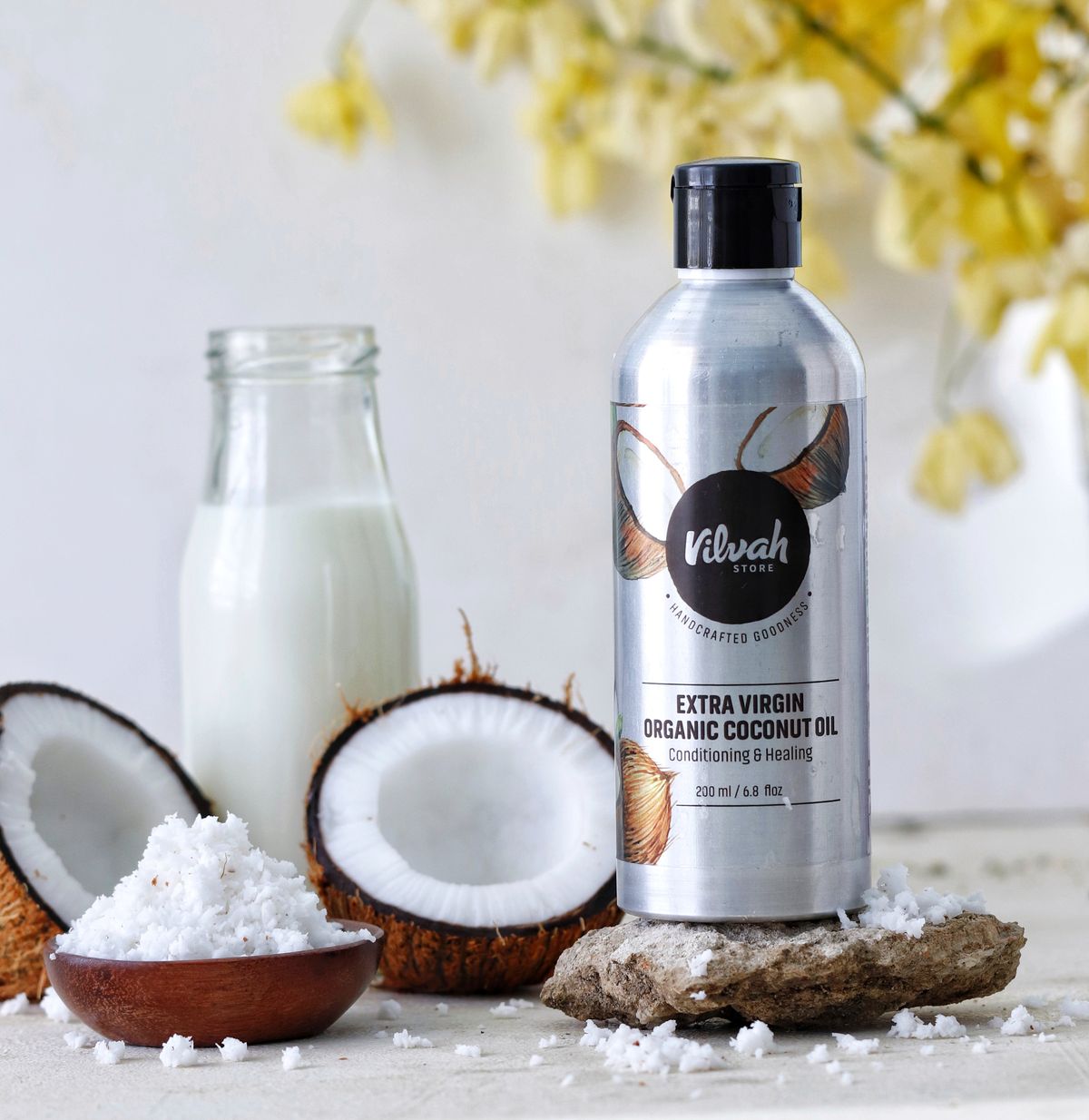
Why we picked it: If you’re going to enjoy coconut oil in moderation, quality matters. This 100% pure, organic, cold-pressed extra-virgin coconut oil is unrefined and free of chemicals or fillers, with the rich, fresh coconut flavor that makes it worth using in the dishes it suits. It’s food-grade and versatile — great for the occasional curry, bake, or stir-fry — and one jar also works for skin and hair. Use it sparingly as a flavor oil, and keep olive oil as your everyday choice.
- Type: Organic extra-virgin
- Process: Cold-pressed
- Grade: Food-grade
- Flavor: Rich, fresh coconut
- Best for: Occasional cooking
- Additives: None
- ✅ Pure & unrefined — nothing added
- ✅ Great flavor for curries & baking
- ✅ Food-grade and versatile
- ✅ Use sparingly — a little goes far
- ✅ Multi-use — kitchen, skin, hair
Check the latest price & reviews on Amazon. Price and availability can change.
Best for: anyone wanting a quality coconut oil to use in moderation, alongside heart-healthy oils.
🤝 Affiliate disclosure: As an Amazon Associate we earn from qualifying purchases. If you buy through our links, we may earn a small commission at no extra cost to you. We only recommend products we’d genuinely use.
Compare: coconut oil options
A quality virgin oil for flavor, or concentrated MCT if you want it for energy (not cholesterol).
| Product | Best for | Type | Note | Buy |
|---|---|---|---|---|
| Nature’s Way Organic Virgin | Occasional cooking | Extra-virgin | Pure, flavorful, use sparingly | Check on Amazon |
| Nutiva Organic MCT Oil | Energy / keto (not cholesterol) | MCT (liquid) | Concentrated, for coffee/shakes | Check on Amazon |
| Viva Naturals Organic | Everyday pantry jar | Cold-pressed virgin | Unrefined, multi-use | Check on Amazon |
Common Mistakes (and Fixes)
- Using coconut oil to “lower” cholesterol.
✅ Fix: It raises LDL — use olive oil for heart-smart cooking. - Believing the superfood hype.
✅ Fix: There’s no proven heart benefit; enjoy it for taste only. - Cooking everything in it.
✅ Fix: Make it occasional; use unsaturated oils daily. - Adding it on top of other fats.
✅ Fix: Swap it in for another fat, don’t stack them. - Making changes without your doctor.
✅ Fix: Get your levels checked and get personal advice.
Real-Life Examples
- The keto coffee fan: someone loves MCT in their morning coffee but keeps olive oil for cooking and gets regular cholesterol checks.
- The curry night: a home cook uses a teaspoon of coconut oil for authentic flavor, then olive oil the rest of the week.
- The wake-up call: a reader with rising LDL cuts back on coconut oil and butter on their doctor’s advice.
- The balanced plate: a family focuses on veggies, fish, and beans, treating all rich fats as occasional.
Frequently Asked Questions
Is coconut oil bad for cholesterol?
It can raise your cholesterol, including LDL (“bad”) cholesterol, because it’s very high in saturated fat. It may also raise HDL, but it has no proven heart benefit. Most heart health experts advise limiting it. Enjoy it occasionally for flavor, and use olive oil for everyday cooking.
Does coconut oil raise or lower cholesterol?
Research shows it tends to raise cholesterol — both LDL and HDL. It does not lower it. If your goal is lower cholesterol, unsaturated oils like olive, canola, or avocado are better everyday choices.
Is coconut oil good for your heart?
There’s no strong evidence that coconut oil benefits your heart, and its high saturated fat content is a concern. It’s not harmful in small amounts within a healthy diet, but it’s not a heart-health food. Focus on an overall pattern rich in plants, whole grains, and fish.
How much coconut oil is safe per day?
There’s no official limit, but because it’s high in saturated fat, keep it small — think a teaspoon or two occasionally, not daily scoops. Watch your total saturated fat across all foods, and ask your doctor if you have high cholesterol or heart concerns.
Is coconut oil better than butter?
It may raise LDL slightly less than butter in some studies, but both are high in saturated fat, and neither is as heart-friendly as olive oil. If you’re choosing for your heart, unsaturated plant oils win.
Can I still use coconut oil if I have high cholesterol?
Talk to your doctor. Many people with high cholesterol are advised to limit saturated fats, which includes coconut oil. You may still enjoy a little for flavor, but it shouldn’t be your main cooking fat. Your doctor can give advice based on your levels.
Your Heart-Smart Checklist
- Don’t use coconut oil to lower cholesterol — it raises LDL
- Make olive or canola oil your everyday cooking fat
- Enjoy coconut oil occasionally, for flavor, in small amounts
- Swap it in for another fat — don’t stack fats
- Watch your total daily saturated fat
- Fill your plate with veggies, whole grains, beans, and fish
- Get your cholesterol checked and follow your doctor’s advice
The Bottom Line
Coconut oil is a flavorful oil, but it’s not a friend to your cholesterol. It’s very high in saturated fat and tends to raise LDL, and despite the online hype, it has no proven heart benefit. The honest, science-based advice is simple: enjoy it occasionally for taste, keep the amounts small, and make unsaturated oils like olive oil your everyday choice. If you want a quality jar for those special dishes, a pure organic virgin coconut oil is a good pick — just use it wisely, and let your doctor guide your heart health.
👉 Coconut oil vs olive oil · MCT oil guide · Coconut oil benefits · Coconut oil & weight loss