Living with psoriasis means dealing with dry, thick, scaly, itchy patches that never seem to quit. If you’re looking for a gentle, natural way to ease the dryness and soften those scales, you may be wondering about coconut oil for psoriasis. Here’s the honest truth: it won’t cure psoriasis, but as a moisturizer it can genuinely make flare skin more comfortable — and this guide shows you exactly how to use it safely alongside your treatment.
Coconut oil can moisturize psoriasis patches, soften thick scales, and calm the dryness and itch that come with a flare. It works best as a supportive moisturizer — not a treatment or cure. Many people also use it to soften scale before applying prescribed medicated creams so they absorb better. Always use it alongside (not instead of) your dermatologist’s plan, and patch test first.
Below you’ll learn what psoriasis is, what coconut oil can and can’t do, how to use it step by step (including for scalp psoriasis), honest cautions, and the best oil to choose. Let’s make those patches more comfortable, the smart way.
Psoriasis is a chronic autoimmune condition, and everyone’s skin and triggers are different. This article is general information only. Talk to your doctor or dermatologist before adding coconut oil to your routine, keep using your prescribed treatments, and patch test first. Never apply it to broken, cracked, bleeding, or infected skin without medical advice.
What Psoriasis Really Is
Psoriasis is a chronic autoimmune condition, not just dry skin or a rash. In psoriasis, your immune system speeds up how fast skin cells grow, so cells pile up on the surface faster than they can shed. That creates the classic raised, red or discolored patches (plaques) covered in silvery-white scales, often on the elbows, knees, scalp, and lower back. These patches can be dry, cracked, itchy, and sometimes painful.
Because it’s an immune condition, psoriasis can’t be cured, and it tends to come and go in flares triggered by things like stress, cold weather, infections, and skin injury. Treatment focuses on calming the immune response and managing symptoms — which is where prescribed medications come in. Moisturizing is a key supportive step that keeps skin comfortable and helps other treatments work better. That’s the role coconut oil can play. For more skin uses, see our coconut oil for skin guide.
Psoriasis is an immune condition, not simple dryness — so no oil can cure it. But keeping the skin deeply moisturized makes flares far more comfortable, and that’s a job coconut oil does beautifully.
Does Coconut Oil Actually Help Psoriasis?
Let’s be honest and clear. There is no strong scientific proof that coconut oil treats or cures psoriasis. It does not fix the underlying immune problem. Any claim that it “clears” psoriasis is overselling.
What coconut oil can realistically do — and it’s genuinely useful — is act as a moisturizer that makes psoriasis skin more comfortable:
- Deeply moisturize dry, tight, cracked plaques.
- Soften thick scales so they’re less flaky and easier to gently remove.
- Reduce itching and the discomfort of dry patches.
- Support the skin barrier, which can help skin feel less irritated.
- Help medicated creams absorb when used to soften scale first (see below).
So think of coconut oil as a comforting, natural moisturizer that supports your real treatment — not a replacement for it. Used that way, many people with psoriasis find it a helpful part of their routine.
Why It Works (As a Moisturizer)
Psoriasis plaques are very dry, and that dryness makes the itching, cracking, and flaking worse. Coconut oil is a rich emollient — its fatty acids sink into the skin, soften it, and seal in moisture, which relieves that tight, dry feeling. By hydrating the scales, it makes them softer and less likely to crack or flake off painfully.
Its mild anti-inflammatory and antioxidant properties may also soothe some of the irritation, and its gentle, additive-free nature suits sensitive, reactive skin — no harsh fragrances or alcohol to sting a flare. None of this changes the immune condition, but it makes living with a flare noticeably more comfortable, which matters a lot day to day.
Use virgin (unrefined), organic coconut oil with no fragrance or additives. That’s the gentlest option for sensitive psoriasis skin and keeps the most natural beneficial compounds.
How to Use Coconut Oil for Psoriasis (Step by Step)
Here’s the gentle, derm-friendly way to add it to your routine.
- Patch test first. Dab a little on a small area and wait 24 hours to be sure your skin tolerates it.
- Apply to slightly damp skin. The best time is right after a lukewarm (not hot) bath or shower, while skin is still a little moist, to lock in water.
- Warm a small amount between your palms until it melts into a light liquid.
- Gently smooth it over the plaques — don’t rub hard or scrub the scales, which can irritate and trigger flares.
- Apply 2–3 times a day, especially when skin feels dry, to keep patches soft and comfortable.
- Keep using your prescribed treatment — coconut oil supports it, it doesn’t replace it.
It’s tempting, but never scrape or forcibly peel psoriasis scales — the “Koebner effect” means injuring the skin can actually trigger new plaques. Instead, let coconut oil soften the scale over time and let it shed naturally, or gently remove softened scale as your doctor advises.
Coconut Oil for Scalp Psoriasis
Scalp psoriasis is common and frustrating, with thick, scaly patches that itch and flake. Coconut oil can help soften those scales and moisturize the scalp. To use it:
- Massage warm coconut oil gently into the affected areas of the scalp.
- Leave it on for 20–30 minutes (or longer, even overnight with a shower cap) to soften the scale.
- Gently loosen softened scale with a soft brush — never scratch or scrape hard.
- Wash out with a gentle or medicated shampoo as recommended by your doctor.
This can make a medicated scalp treatment work better by clearing softened scale first. As always, check with your dermatologist, especially for scalp psoriasis, which often needs specific medicated products.
Using It to Soften Scale Before Medicated Creams
Here’s one of coconut oil’s most practical roles for psoriasis. Thick scale can block prescribed medicated creams from reaching the skin underneath. Many people apply a little coconut oil first to soften and reduce the scale, then apply their medicated treatment so it absorbs better and works more effectively. Ask your dermatologist if this approach fits your treatment plan — it’s a simple way to get more out of the medications that actually manage the condition.
Best Coconut Oil for Psoriasis
For psoriasis, choose pure, organic, virgin coconut oil — unrefined and fragrance-free, so it’s gentle on sensitive, reactive skin. Here’s our top pick.
Nature’s Way Organic Extra Virgin Coconut Oil
TOP PICK
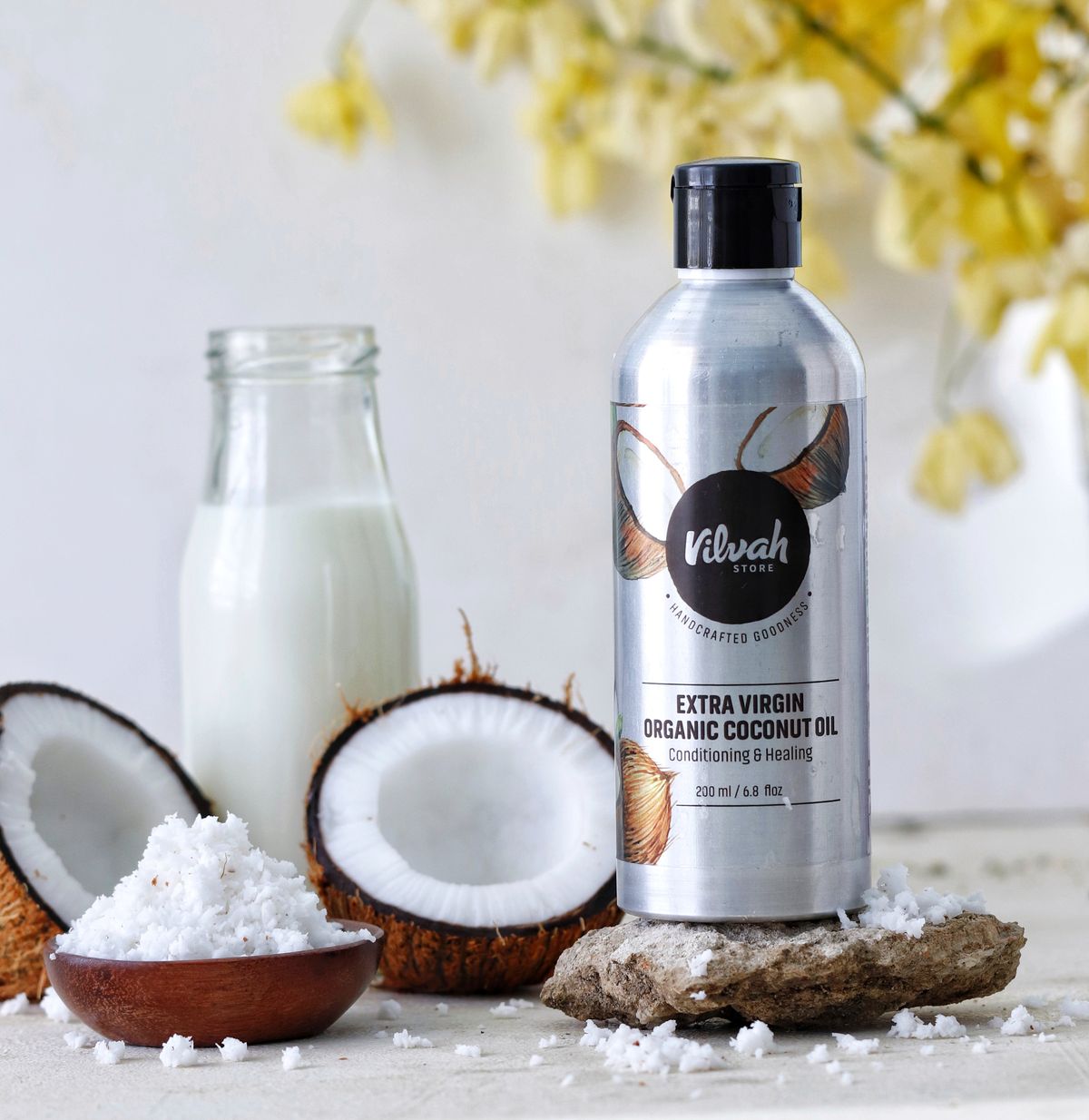
Why we picked it: This 100% pure, organic, cold-pressed extra-virgin coconut oil is ideal for the very dry, scaly skin of psoriasis. Because it’s unrefined with nothing added, there’s no fragrance or alcohol to sting sensitive, reactive plaques. It deeply moisturizes tight, cracked patches, softens thick scale, and calms the dryness and itch of a flare — and it’s the kind of gentle oil you can use to soften scale before your medicated cream. It’s food-grade and multi-use for skin, scalp, and hair. Remember to patch test and keep it alongside your prescribed treatment.
- Type: Organic extra-virgin
- Process: Cold-pressed
- Additives: None
- Fragrance: None
- Best for: Dry, scaly patches
- Grade: Food-grade
- ✅ Deeply moisturizes dry plaques
- ✅ Softens thick scale gently
- ✅ Fragrance-free — no sting on flares
- ✅ Calms dryness and itch
- ✅ Multi-use for skin & scalp
Check the latest price & reviews on Amazon. Price and availability can change.
Best for: gentle, fragrance-free daily moisturizing of psoriasis-prone skin, alongside your doctor’s plan.
🤝 Affiliate disclosure: As an Amazon Associate we earn from qualifying purchases. If you buy through our links, we may earn a small commission at no extra cost to you. We only recommend products we’d genuinely use.
Compare: coconut oils for psoriasis
Any pure, virgin oil works; pick based on feel and value.
| Product | Best for | Type | Note | Buy |
|---|---|---|---|---|
| Nature’s Way Organic Virgin | Daily plaque moisture | Extra-virgin | Pure, fragrance-free | Check on Amazon |
| Viva Naturals Organic | Whole-body use | Cold-pressed virgin | Unrefined, no additives | Check on Amazon |
| Fractionated Coconut Oil | Lighter, non-greasy feel | Liquid | Absorbs fast, gentle | Check on Amazon |
When to Avoid Coconut Oil (and See a Doctor)
Skip coconut oil, or get medical advice first, if:
- Skin is cracked, bleeding, or infected — don’t apply oil; see your doctor.
- You have a coconut allergy — obviously avoid it, and patch test if unsure.
- It irritates your skin — a small number of people react; stop if redness or itch increases.
- Your psoriasis is severe or spreading — this needs proper medical treatment, not just a moisturizer.
- You have psoriatic arthritis or joint symptoms — these need medical care beyond skin moisturizing.
Coconut oil is a comfort measure, not a cure. Never stop or replace prescribed psoriasis treatment with it. If your psoriasis worsens, spreads, becomes infected, or affects your joints, see your dermatologist. Read our full wellness disclaimer.
Common Mistakes (and Fixes)
- Expecting it to cure psoriasis.
✅ Fix: Use it as a moisturizer alongside your prescribed treatment. - Scraping or picking scales.
✅ Fix: Let oil soften scale; never scrape (it can trigger new plaques). - Applying to bone-dry skin.
✅ Fix: Apply to damp skin after a lukewarm bath. - Using scented or refined oil.
✅ Fix: Choose pure, unrefined, fragrance-free virgin oil. - Skipping the patch test.
✅ Fix: Test 24 hours first; some skin reacts.
Real-Life Examples
- Winter flare: daily coconut oil eases the extra dryness and cracking of cold-weather plaques.
- Scalp scale: an overnight oil treatment softens thick scalp scale before a medicated shampoo.
- Better absorption: softening scale with oil first helps a prescribed cream reach the skin.
- Combined care: someone uses their dermatologist’s treatment for the condition and coconut oil for daily comfort.
Frequently Asked Questions
Is coconut oil good for psoriasis?
As a moisturizer, yes. Coconut oil softens dry, scaly plaques, calms itch, and helps medicated creams absorb better. It does not cure psoriasis, which is an autoimmune condition, so use it alongside your dermatologist’s treatment and patch test first.
Can coconut oil cure psoriasis?
No. Psoriasis is a chronic autoimmune condition with no cure. Coconut oil can ease symptoms like dryness and scaling, but it can’t fix the underlying immune problem. Keep using your prescribed treatment.
How often should I apply coconut oil for psoriasis?
Two to three times a day is common, especially after a lukewarm bath and whenever skin feels dry. Apply gently to keep plaques soft and comfortable, and follow your doctor’s overall plan.
Can I use coconut oil for scalp psoriasis?
Yes, to soften scale and moisturize the scalp. Massage in warm oil, leave it 20–30 minutes, gently loosen softened scale, and wash out with a gentle or medicated shampoo. Check with your dermatologist first.
Does coconut oil help remove psoriasis scales?
It softens scales so they’re less flaky and easier to shed naturally or remove gently. Never scrape or pick scales, as injuring the skin can trigger new plaques.
Can coconut oil make psoriasis worse?
For most people it soothes, but a small number react to it, and it shouldn’t go on cracked, bleeding, or infected skin. Patch test first and stop if irritation increases. See your doctor if your psoriasis worsens.
Your Comfort Checklist
- Patch test 24 hours before regular use
- Choose organic, virgin, fragrance-free oil
- Apply to damp skin after a lukewarm bath
- Never scrape scales — let them soften and shed
- Use it to soften scale before medicated creams
- Keep using your prescribed treatment
- See a dermatologist for severe, spreading, or joint symptoms
The Bottom Line
Coconut oil won’t cure psoriasis — nothing over-the-counter does — but as a gentle, natural moisturizer it can make flares far more comfortable. It softens thick scales, relieves the dry, tight, itchy feeling, and can help your medicated creams absorb better when used to soften scale first. Use a pure, fragrance-free virgin oil, apply to damp skin, never scrape the scales, and always keep it alongside your dermatologist’s treatment. Grab a jar of organic virgin coconut oil for daily comfort and talk to your doctor about the best plan for you.
👉 Coconut oil for skin · Coconut oil for eczema · Coconut oil benefits · 50+ ways to use it