Wondering if that jar of coconut oil can fade your stretch marks? You’re not alone — it’s one of the most-searched natural remedies out there. Here’s the honest truth: coconut oil for stretch marks won’t erase them, but it can genuinely help your skin look and feel better, and may make marks less noticeable over time. This friendly guide explains exactly what it can and can’t do, and how to use it the smart way.
Coconut oil deeply moisturizes and improves skin softness and elasticity, which can make stretch marks look less obvious and help keep new ones from forming as easily. But it cannot remove existing stretch marks — nothing over-the-counter truly erases them. Think “improve and prevent,” not “erase.”
Below you’ll get the real science in plain English, what actually works alongside coconut oil, a step-by-step routine, honest expectations, and the best products to grab. No false promises — just useful, real-world advice.
What Stretch Marks Really Are
Before we talk about fixing them, it helps to understand what they are. Stretch marks (doctors call them striae) are a type of scar that forms when your skin stretches or shrinks quickly — during pregnancy, growth spurts, rapid weight change, or muscle gain. That fast stretch tears the middle layer of skin (the dermis), and as it heals, you get those telltale streaks.
Fresh stretch marks often look red, pink, or purple (these are called “striae rubra”). Over months to years, they fade to silvery-white or skin-toned lines (called “striae alba”). This matters because newer, red/purple marks respond much better to treatment than older, white ones. So the earlier you start caring for your skin, the better your results are likely to be.
Stretch marks are scars, not just dry skin. That’s the key to honest expectations: you can soften and fade them, and prevent new ones, but no cream or oil fully erases a scar.
Stretch marks are incredibly common and completely normal — most people get them at some point, and they’re nothing to be ashamed of. But if you’d like to reduce their appearance, coconut oil can be a gentle, affordable part of your routine.
Does Coconut Oil Actually Work on Stretch Marks?
Let’s be straight with you. There’s no strong scientific proof that coconut oil removes stretch marks. Studies on oils and stretch marks are limited and mixed. So any product — coconut oil included — that promises to “erase” stretch marks is overselling.
Here’s what coconut oil can realistically do:
- Deeply moisturize the skin, which improves softness and a healthy appearance.
- Improve skin elasticity over time, since well-hydrated skin is more supple.
- Reduce dryness and itchiness around stretched skin (a common complaint in pregnancy).
- Make marks look less noticeable as smoother, hydrated skin reflects light more evenly.
So it’s genuinely useful for skin health and appearance — just not a magic eraser. Used consistently, especially on newer marks, many people feel their skin looks and feels better. That’s a realistic, honest win. For broader skin uses, see our coconut oil for skin guide.
How Coconut Oil Helps (The Honest Version)
Coconut oil is rich in fatty acids and vitamin E, both of which support the skin barrier. When you massage it in, two helpful things happen. First, it moisturizes and softens, so stretched or scarred skin feels less tight and dry. Second, the act of massaging boosts blood flow to the area, which some believe supports skin repair and helps the oil absorb.
Its mild antioxidant content (vitamin E) may also support healthier-looking skin over time. And because it’s gentle and natural, it’s a comfortable option for sensitive or pregnant skin — free of the harsh fragrances found in some products. None of this “erases” a mark, but together it can nudge the skin toward looking smoother and more even.
For fading stretch marks, dermatologists point to ingredients like retinoids (for newer marks, but not during pregnancy), hyaluronic acid, and in-office treatments like microneedling or laser. Coconut oil is a lovely daily moisturizer to pair with those — think of it as supportive care, and see a dermatologist for the strongest options.
How to Use Coconut Oil on Stretch Marks (Step by Step)
Consistency is everything here. A quick daily habit beats an occasional slather.
- Start with clean, slightly damp skin, ideally right after a warm shower when pores are open and skin absorbs best.
- Scoop a small amount of virgin coconut oil and warm it between your palms until it melts.
- Massage it in using firm, circular motions over the stretch marks for 2–5 minutes. The massage matters as much as the oil.
- Let it absorb before dressing, or apply at night and let it work while you sleep.
- Repeat twice daily — morning and night — and keep it up for weeks. Results, if any, are gradual.
Combine coconut oil with a gentle exfoliation once or twice a week (a coconut-oil-and-sugar scrub works). Removing dead skin cells first helps the oil absorb and keeps skin smooth. Always be gentle — never scrub hard over irritated skin.
Preventing New Stretch Marks
Here’s where coconut oil may shine most: prevention. While you can’t guarantee stretch-mark-free skin (genetics play a big role), keeping skin well-moisturized and supple gives it the best chance to stretch without tearing. To help prevent new marks:
- Moisturize daily during times of change — pregnancy, weight gain or loss, muscle-building.
- Stay hydrated and eat skin-supporting foods (vitamins C and E, zinc, healthy fats).
- Aim for gradual weight or muscle changes when possible, since rapid change stresses the skin.
- Massage the oil in to boost circulation and keep skin flexible.
Genetics still have the final say — if your mom got stretch marks, you’re more likely to as well — but good skin care stacks the odds in your favor.
Coconut Oil During Pregnancy
Coconut oil is a popular, gentle choice for pregnant and postpartum bellies because it’s natural, fragrance-free (when unrefined), and soothing for the itchy, tight skin that comes with a growing bump. Massaging it onto the belly, hips, thighs, and breasts daily can ease that itch and keep skin comfortable.
Coconut oil applied to the skin is generally considered safe in pregnancy, but everyone is different — check with your doctor or midwife before starting any new product, and patch test first. Importantly, avoid retinoid creams during pregnancy; they’re not safe for baby. This article is general info, not medical advice — see our disclaimer.
Best Coconut Oil for Stretch Marks
For stretch marks, you want pure, organic, unrefined (virgin) coconut oil — no additives or fragrance, so it’s gentle on sensitive and pregnant skin. Here’s our top pick.
Nature’s Way Organic Extra Virgin Coconut Oil
TOP PICK
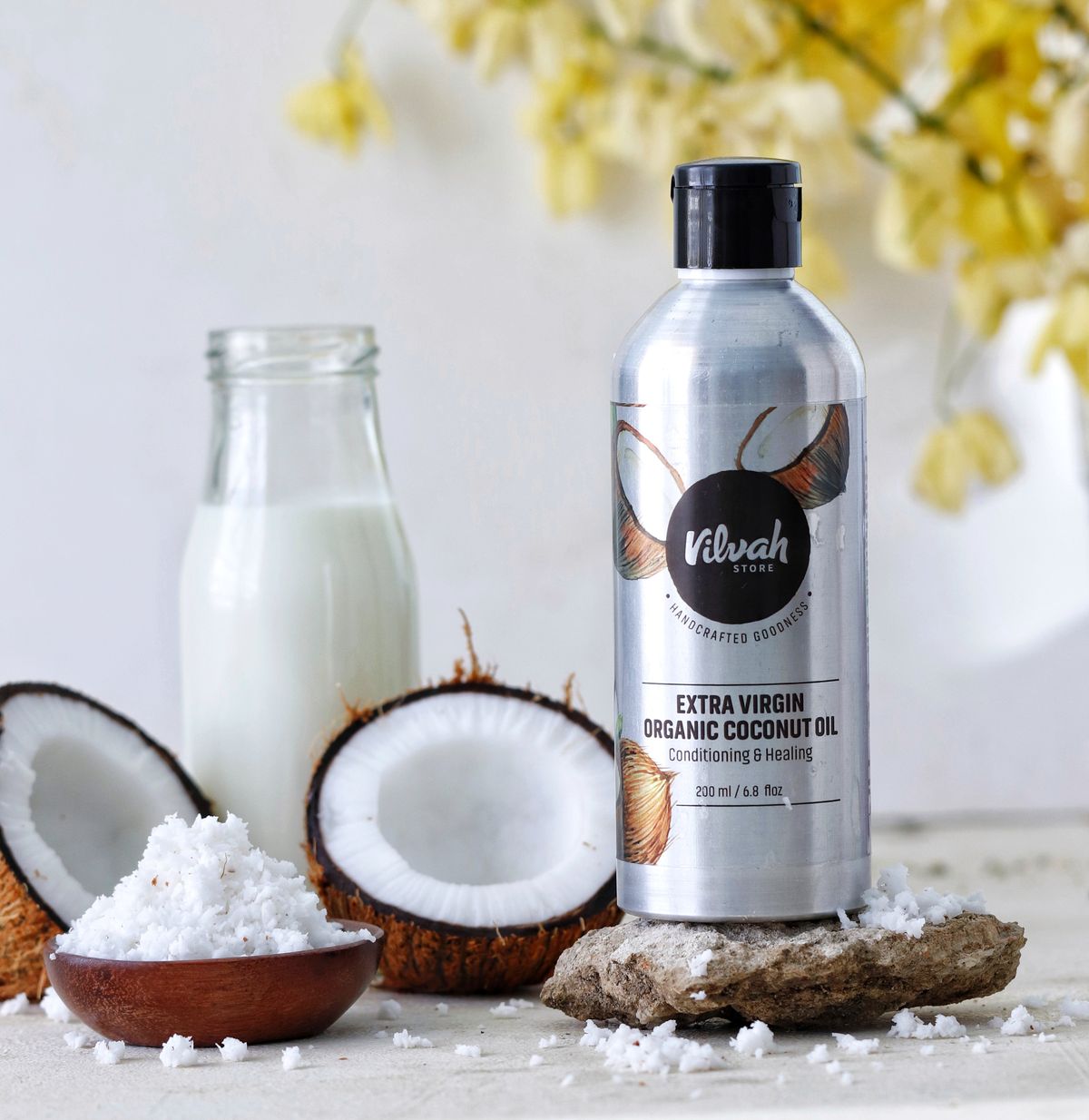
Why we picked it: This is 100% pure, organic, cold-pressed extra-virgin coconut oil — exactly the kind you want for stretch-mark care. It’s unrefined with nothing added, so it’s gentle enough for sensitive and pregnant skin, deeply moisturizing, and rich in the fatty acids and vitamin E that keep skin soft and supple. It’s food-grade and multi-use, so one jar covers your belly, hips, thighs, plus skin, hair, and cooking. Massage it in daily for the best chance of smoother-looking skin.
- Type: Organic extra-virgin
- Process: Cold-pressed
- Additives: None
- Best for: Belly, hips, thighs
- Scent: Light natural coconut
- Grade: Food-grade
- ✅ Deeply moisturizes stretched skin
- ✅ Gentle & fragrance-free for pregnancy
- ✅ Rich in vitamin E and fatty acids
- ✅ Eases itch on a growing bump
- ✅ Pure, multi-use — one jar does it all
Check the latest price & reviews on Amazon. Price and availability can change.
Best for: anyone wanting a pure, gentle daily oil to moisturize stretch-marked or pregnant skin.
🤝 Affiliate disclosure: As an Amazon Associate we earn from qualifying purchases. If you buy through our links, we may earn a small commission at no extra cost to you. We only recommend products we’d genuinely use.
Compare: coconut oil options for stretch marks
A pure virgin jar for rich moisture, a lighter organic option, or a non-greasy liquid.
| Product | Best for | Feel | Note | Buy |
|---|---|---|---|---|
| Nature’s Way Organic Virgin | Daily belly massage | Rich | Pure, gentle, food-grade | Check on Amazon |
| Viva Naturals Organic | Everyday skin + kitchen | Rich | Cold-pressed, unrefined | Check on Amazon |
| Fractionated Coconut Oil | Non-greasy application | Very light | Stays liquid, great massage base | Check on Amazon |
Setting Realistic Expectations
This is the most important section, so let’s be honest. Coconut oil is not a cure. If you use it faithfully, here’s what’s realistic to expect: softer, better-hydrated skin; less itching and tightness; and, over weeks to months, stretch marks that may look a little less noticeable — especially newer, red/purple ones. What’s not realistic is complete removal or dramatic fading of old, white marks.
And remember: stretch marks naturally fade over time on their own, and they’re a totally normal part of having a body that grows and changes. If they bother you and you want stronger results, a dermatologist can offer proven options (prescription retinoids for non-pregnant skin, microneedling, laser). Coconut oil is the gentle, affordable daily-care piece — not the whole solution.
Coconut Oil vs Other Stretch Mark Remedies
Coconut oil is far from the only thing people rub on stretch marks. Here’s an honest look at how it compares, so you can mix and match wisely.
| Remedy | What it does | Honest verdict |
|---|---|---|
| Coconut oil | Deeply moisturizes; improves softness | Great daily care; won’t erase marks |
| Cocoa / shea butter | Rich moisture; eases itch | Similar to coconut oil; nice for bumps |
| Bio-Oil / blended oils | Moisturize; some see softer look | Popular, but evidence is modest |
| Prescription retinoids | Boost collagen on newer marks | Stronger, but NOT for pregnancy |
| Microneedling / laser | Stimulate skin remodeling | Most effective; done by a pro |
The pattern is clear: moisturizers like coconut oil, cocoa butter, and shea butter are all gentle, comforting daily care that keep skin supple — a genuine benefit, but none of them truly erases a mark. The heavier hitters (retinoids, microneedling, laser) come from a dermatologist. A smart plan is to use coconut oil daily for hydration and comfort, and add a professional treatment if you want stronger fading.
DIY Coconut Oil Blends for Stretch Marks
Want to boost your coconut oil? A couple of simple homemade blends add extra skin-loving ingredients:
- Coconut oil + vitamin E: stir a few drops of vitamin E oil into a spoonful of coconut oil for an antioxidant-rich massage blend.
- Coconut oil + shea butter: melt equal parts together for a thicker, richer belly balm that’s lovely for dry, itchy pregnancy skin.
- Coconut oil + sugar scrub: mix with fine sugar for a gentle weekly exfoliator to buff away dead skin before moisturizing.
- Coconut oil + a drop of pregnancy-safe oil (like almond) for a lighter feel — patch test and check with your doctor first.
Keep any blend simple, patch test new ingredients, and skip anything not confirmed safe if you’re pregnant. These aren’t miracle mixes, but they make daily moisturizing feel a little more nourishing and pampering.
Common Mistakes (and Fixes)
- Expecting stretch marks to disappear.
✅ Fix: Aim to improve and prevent, not erase; see a derm for stronger options. - Using it once in a while.
✅ Fix: Apply twice daily and stay consistent for weeks. - Skipping the massage.
✅ Fix: Massage in circles — it boosts circulation and absorption. - Only starting on old white marks.
✅ Fix: Start early on new red/purple marks for the best results. - Using refined or scented oil on sensitive skin.
✅ Fix: Choose pure, unrefined, fragrance-free oil.
Real-Life Examples
- Pregnancy itch: a daily belly massage with coconut oil eases the tight, itchy feeling of a growing bump.
- Post-workout gains: someone building muscle fast uses it to keep skin supple and hydrated.
- New mom routine: consistent use on newer marks makes them feel softer and look a bit less obvious.
- Combined approach: a reader pairs coconut oil moisturizing with a dermatologist’s plan for stronger fading.
Frequently Asked Questions
Does coconut oil remove stretch marks?
No. Coconut oil cannot remove or erase stretch marks — nothing over-the-counter truly does. It moisturizes and improves skin softness and elasticity, which may make marks look less noticeable and help prevent new ones.
How long does coconut oil take to fade stretch marks?
Any improvement is gradual, usually over several weeks to a few months of consistent twice-daily use. Newer, red or purple marks respond better than older, white ones. Be patient and realistic.
Is coconut oil safe for stretch marks during pregnancy?
Topical coconut oil is generally considered safe and gentle in pregnancy and can ease itchy, tight belly skin, but check with your doctor or midwife first and patch test. Avoid retinoid creams during pregnancy.
How often should I apply coconut oil to stretch marks?
Twice daily — morning and night — is ideal, massaging it in for a few minutes each time. Consistency matters more than the amount you use.
Can coconut oil prevent stretch marks?
It may help by keeping skin well-moisturized and supple during times of stretching, but genetics play a big role, so it can’t guarantee prevention. Daily moisturizing still gives your skin its best chance.
What works better than coconut oil for stretch marks?
For fading marks, dermatologist options like prescription retinoids (not in pregnancy), microneedling, and laser are stronger. Coconut oil is best as gentle, daily supportive moisturizing alongside those.
Your Skin-Care Checklist
- Apply to clean, damp skin after a shower
- Massage in circles for 2–5 minutes
- Use twice daily and stay consistent
- Start early on new red/purple marks
- Exfoliate gently once or twice a week
- Choose pure, unrefined, fragrance-free oil
- See a dermatologist for stronger fading options
The Bottom Line
Coconut oil won’t erase your stretch marks — but it’s a gentle, affordable way to deeply moisturize, ease itch and tightness, and possibly make marks look a little less noticeable while helping prevent new ones. Massage a pure, unrefined oil into clean skin twice a day, start early on newer marks, and keep your expectations realistic. For stronger fading, pair it with a dermatologist’s plan. Grab a jar of organic virgin coconut oil and make it part of your daily routine.
👉 Coconut oil for skin · Coconut oil benefits · Fractionated coconut oil · 50+ ways to use it