
A dull coat, a dry mane, itchy skin, or a picky eater — horse owners are always looking for simple, natural ways to help. That’s why coconut oil for horses has become so popular around the barn. Used the right way, it can add shine to the coat, soothe dry skin, and even support digestion. This friendly, honest guide covers exactly how to use it, how much, the real benefits, and the cautions every owner should know.
Coconut oil is a safe, versatile natural supplement for most horses when introduced slowly and in sensible amounts. Fed in small quantities it can support a shiny coat, healthy skin, and digestion, and applied topically it soothes dry skin, mane, tail, and minor irritations. Start with a small amount, build up gradually, and always check with your vet first — especially for horses with metabolic conditions.
Below you’ll learn the real benefits (fed and topical), how much to give, step-by-step how to introduce it, honest cautions, and the best oil to buy in a barn-friendly size. Let’s help your horse look and feel great.
This article is general information, not veterinary advice. Every horse is different, and coconut oil is high in fat and calories. Always check with your veterinarian before adding it to your horse’s diet — especially for horses that are overweight, insulin-resistant, have equine metabolic syndrome, laminitis history, or any health condition. Introduce it slowly and stop if anything seems off.
Is Coconut Oil Safe for Horses?
For most healthy horses, yes — coconut oil is generally considered safe in sensible amounts, both fed and applied to the skin and coat. It’s a natural, plant-based fat, and many owners and equine nutritionists use it as a coat conditioner and a source of “cool” energy (energy without the fizzy, hot behavior that grain can cause).
That said, coconut oil is high in fat and calories, so it’s not right for every horse. Overweight horses, and those with insulin resistance, equine metabolic syndrome, or a history of laminitis, need careful management of fats and sugars — so coconut oil should only be added with your vet’s guidance. And because it’s a rich fat, giving too much too fast can upset digestion. The safe approach for any horse is start small, increase slowly, and involve your vet.
Coconut oil isn’t a miracle, but it’s a genuinely useful natural tool for a horse’s coat, skin, and diet — as long as you respect that it’s a rich fat and introduce it slowly with your vet’s okay.
The Real Benefits (Fed and Topical)
Coconut oil works both from the inside (fed) and the outside (applied). Here’s what owners and equine pros commonly see:
- ✨ Shinier coat — the healthy fats support a glossy, conditioned coat, whether fed or applied.
- 💧 Healthier skin — moisturizes dry, flaky skin and soothes minor irritation topically.
- 🐴 Mane & tail conditioning — softens and detangles dry, brittle mane and tail hair.
- ⚡ “Cool” energy — a source of calories/energy that’s less likely to cause excitable behavior than sugary feeds.
- 🍽️ Palatability — a little can make feed more tempting for fussy eaters.
- 🦠 Mild antimicrobial support — its lauric acid offers gentle antibacterial/antifungal properties for skin.
- 🦷 Some owners use it around the muzzle/gums — though always ask your vet about oral use.
Coconut oil is a supplement and coat aid, not a treatment for disease. For real skin conditions (rain rot, sweet itch, sarcoids), lameness, colic, or metabolic issues, your vet’s diagnosis and treatment come first. Coconut oil can be a nice supportive extra, not a cure.
For Coat, Mane, and Tail
This is one of the easiest and most popular uses. Applied topically, coconut oil conditions the coat and adds a natural shine, and it’s fantastic for a dry, tangled mane and tail. To use it:
- Warm a small amount in your hands so it melts into a light liquid.
- Work it through the mane and tail to soften, detangle, and add shine — a little goes a long way.
- Smooth a thin layer over the coat or dry patches for conditioning and gloss.
- Use as a grooming finish before a show for a healthy sheen (avoid over-applying, which attracts dust).
It’s a natural alternative to chemical-laden coat sprays and detanglers, and many owners love that it’s simple and multi-purpose.
For Skin and Minor Irritations
Coconut oil’s moisturizing and mild antimicrobial qualities make it a gentle helper for dry, flaky skin, cracked heels, a dry muzzle, or minor scrapes and irritations. A thin layer can soothe and protect these areas. Some owners also use it to help with insect-related itchiness or to condition areas rubbed raw.
Coconut oil is for minor, dry-skin comfort — not a treatment for real conditions. Rain rot, sweet itch, sarcoids, deep wounds, infections, or spreading skin problems need your vet. Don’t apply oil to open, deep, or infected wounds, and see your vet if a skin issue isn’t improving.
Feeding Coconut Oil: How Much?
When feeding, the golden rule is start low and go slow. A horse’s gut needs time to adjust to added fat, and too much too soon can cause loose droppings or digestive upset. There’s no single official dose, but a common careful approach is:
| Stage | Typical careful amount | Notes |
|---|---|---|
| Introduction (week 1) | 1–2 tablespoons/day | Watch droppings and appetite |
| If tolerated | Build up gradually | Increase slowly over 1–2 weeks |
| Maintenance | Up to ~1/4–1/2 cup/day (vet-guided) | Depends on horse size, workload, condition |
These are cautious general figures, not a prescription. The right amount depends on your horse’s size, weight, workload, and health — so let your vet or equine nutritionist set the target. Melt it into or mix it with the regular feed, and always factor the extra calories into your horse’s overall diet.
How to Introduce Coconut Oil (Step by Step)
- Ask your vet first — especially for overweight, metabolic, or laminitis-prone horses.
- Choose a pure, unrefined coconut oil with no additives (a big, food-grade tub is most economical).
- Start with 1–2 tablespoons a day, mixed or melted into the regular feed.
- Watch for 1–2 weeks: check droppings, appetite, and behavior for any signs of upset.
- Increase gradually only if all is well, toward a vet-guided maintenance amount.
- Adjust total calories so the added fat doesn’t lead to unwanted weight gain.
- Stop and consult your vet at any sign of loose droppings, colic, or discomfort.
Coconut oil is solid when cool and liquid when warm. In cold barns it firms up — warm the tub near (not on) a heat source, or scoop and melt what you need. Store it sealed and clean, and use a clean scoop to keep the tub fresh.
Best Coconut Oil for Horses
For horses you want a pure, unrefined coconut oil in a big, economical, food-grade tub — enough to feed and use topically without breaking the bank. Here’s our top pick.
Island Fresh Organic Extra Virgin Coconut Oil (54 oz)
BARN SIZE
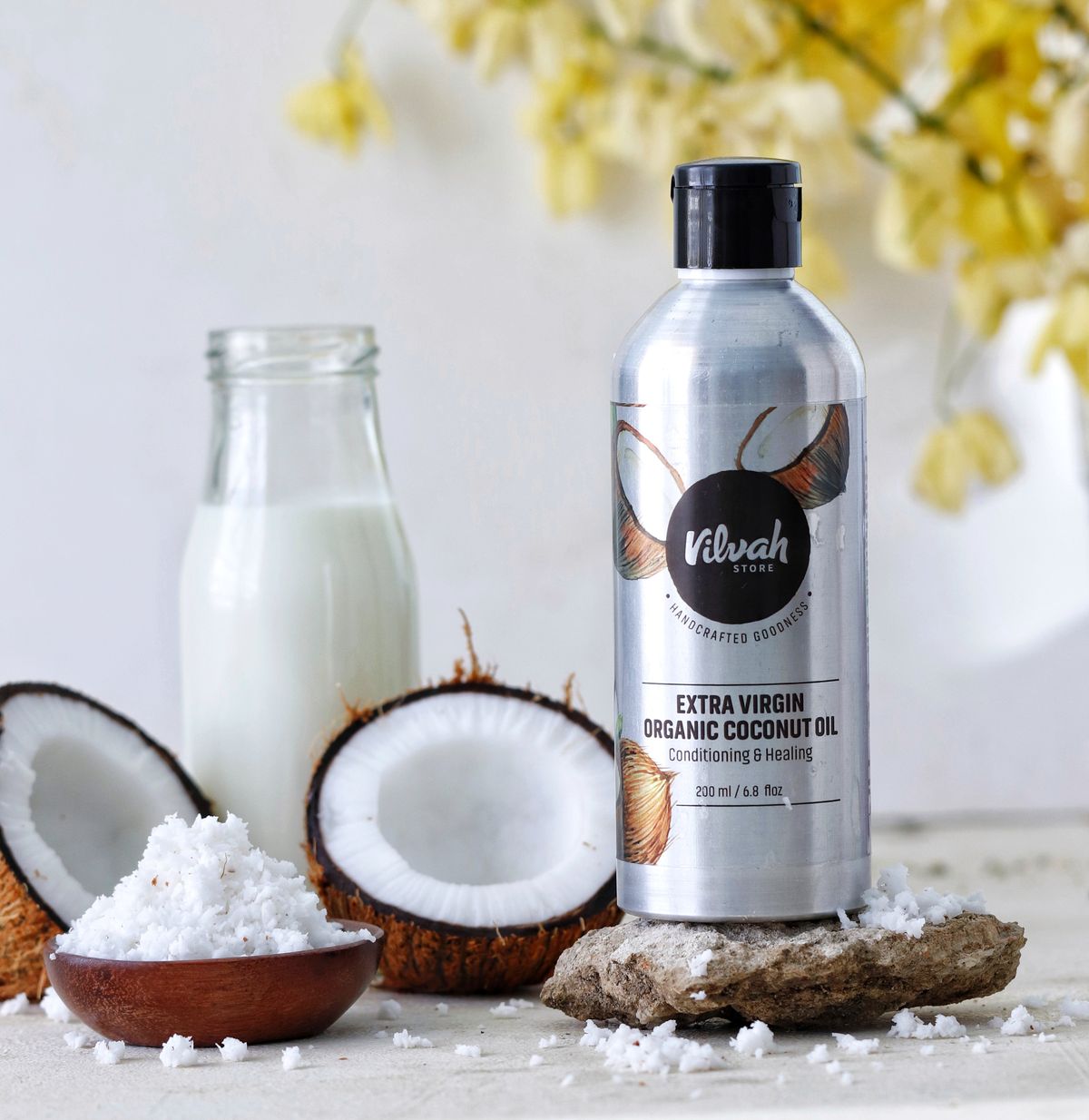
Why we picked it: This big 54-oz tub of organic, cold-pressed extra-virgin coconut oil is ideal for horse owners — pure and unrefined with nothing added, so it’s food-grade for feeding and gentle for topical coat, mane, and skin care. The large size makes it economical for the barn, whether you’re mixing a spoonful into feed for a shinier coat and “cool” energy or working it through a dry mane and tail. It’s versatile enough for the whole household and pets too. As always for horses: start small, build up slowly, and check with your vet first.
- Type: Organic extra-virgin
- Size: 54 oz (barn-friendly)
- Process: Cold-pressed
- Additives: None
- Use: Feed & topical
- Grade: Food-grade
- ✅ Big, economical tub for the barn
- ✅ Pure & unrefined — food-grade
- ✅ Coat, mane & tail conditioning
- ✅ “Cool” energy when fed in moderation
- ✅ Multi-use for skin and feed
Check the latest price & reviews on Amazon. Price and availability can change.
Best for: owners who want an economical, pure coconut oil for both feeding and coat care (after a vet’s okay).
🤝 Affiliate disclosure: As an Amazon Associate we earn from qualifying purchases. If you buy through our links, we may earn a small commission at no extra cost to you. We only recommend products we’d feel comfortable using.
Compare: coconut oils for horses
A big tub for feeding and coat care, or a smaller pure option.
| Product | Best for | Type | Note | Buy |
|---|---|---|---|---|
| Island Fresh 54 oz | Barn use & feeding | Organic virgin | Big, economical, food-grade | Check on Amazon |
| Parachute Pure Unrefined | Coat, mane & tail | Unrefined | Pure, budget-friendly | Check on Amazon |
| Nature’s Way Organic Virgin | Smaller / topical use | Extra-virgin | Pure, food-grade | Check on Amazon |
When to Avoid Coconut Oil (or Ask Your Vet First)
Skip coconut oil, or get explicit vet clearance first, if your horse:
- Is overweight or an easy keeper — the extra calories work against them.
- Has insulin resistance, equine metabolic syndrome, or laminitis history — fats and diet need careful management.
- Has a sensitive stomach or ongoing digestive issues — added fat may worsen them.
- Reacts to a first small amount — loose droppings or upset means back off and call the vet.
- Has open wounds or a real skin condition — don’t rely on oil; see your vet.
Introduce any dietary change slowly, and let your veterinarian guide the amount and whether coconut oil suits your horse at all. For colic, laminitis, metabolic disease, or a skin condition that isn’t improving, get veterinary care. Read our full wellness disclaimer.
Common Mistakes (and Fixes)
- Feeding too much, too fast.
✅ Fix: Start with 1–2 tablespoons and increase over weeks. - Ignoring calories/weight.
✅ Fix: Count the fat in the diet; skip it for easy keepers. - Using it on real skin conditions.
✅ Fix: See your vet for rain rot, sweet itch, wounds, or sarcoids. - Over-applying to the coat.
✅ Fix: Use a thin layer; too much attracts dust and dirt. - Skipping the vet check.
✅ Fix: Always ask first, especially for metabolic horses.
Real-Life Examples
- Dull winter coat: a spoonful in feed plus a light topical rub restores shine.
- Tangled tail: warm oil worked through softens and detangles a dry tail.
- Picky eater: a little oil makes feed more tempting (calories counted in).
- Sensitive horse: loose droppings after too much oil, so the owner cuts back and consults the vet.
Frequently Asked Questions
Is coconut oil good for horses?
For most healthy horses, yes, in sensible amounts. Fed in small quantities it supports a shiny coat, healthy skin, and “cool” energy, and applied topically it conditions the coat, mane, and tail and soothes dry skin. It’s high in fat, so introduce it slowly and check with your vet.
How much coconut oil can I feed my horse?
Start with 1–2 tablespoons a day and build up gradually over a week or two, toward a vet-guided maintenance amount (often up to about 1/4–1/2 cup for larger horses). The right amount depends on size, workload, and health, so ask your vet.
Can coconut oil help my horse’s coat?
Yes. Fed or applied, the healthy fats support a glossy coat, and it’s great for conditioning and detangling a dry mane and tail. Use a thin layer topically so it doesn’t attract dust.
Is coconut oil safe for horses with metabolic issues?
Only with your vet’s guidance. Coconut oil is high in calories, and horses with insulin resistance, equine metabolic syndrome, or laminitis history need carefully managed diets. Always consult your vet first.
Can I put coconut oil on my horse’s skin?
A thin layer can soothe dry, flaky skin, a dry muzzle, or minor irritations. It’s not a treatment for real conditions like rain rot, sweet itch, or wounds, which need veterinary care.
What kind of coconut oil is best for horses?
Pure, unrefined, food-grade coconut oil with no additives. A big, economical tub is ideal for the barn since you can use it for both feeding and coat care.
Your Horse-Care Checklist
- Ask your vet before feeding coconut oil
- Choose pure, unrefined, food-grade oil
- Start with 1–2 tablespoons a day
- Build up slowly over 1–2 weeks
- Count the calories in the overall diet
- Use a thin layer topically for coat & mane
- See your vet for skin conditions or digestive upset
The Bottom Line
Coconut oil is a safe, versatile natural extra for most horses — a shine-boosting coat conditioner, a soothing skin helper, and a source of “cool” energy when fed in moderation. The keys are to start small, build up slowly, count the calories, and always involve your vet, especially for overweight or metabolic horses. It’s a supplement and grooming aid, not a treatment for real conditions. For the barn, an economical, pure choice like a big tub of organic virgin coconut oil covers both feeding and coat care — after your vet gives the go-ahead.
👉 Coconut oil for dogs · Coconut oil for cats · Coconut oil benefits · Best coconut oil guide