With dozens of jars, tubs, and bottles all claiming to be the “best,” choosing a coconut oil can feel surprisingly hard. Do you need organic? Virgin or refined? Is a fancy brand worth double the price? This 2026 buying guide cuts through the noise with clear picks for every use — cooking, skin, hair, and oil pulling — plus exactly what to look for on the label.
For most people, an unrefined, organic virgin coconut oil is the best all-round choice — it keeps the natural nutrients and mild coconut flavor. Our top overall pick is Nature’s Way Organic Extra-Virgin Coconut Oil. For high-heat cooking choose a refined oil, and for skin, hair, or massage a fractionated (liquid) coconut oil is easiest to use.
We compared products on purity, processing, taste, value, and real-world reviews. Below you’ll find our top pick, a full comparison table, category winners for every need, and a plain-English guide to reading the label. Let’s find your jar.
How We Chose the Best Coconut Oils
Not all coconut oil is created equal, and the differences are easy to miss on a busy shelf. To rank these, our editors weighed the factors that actually change your experience — from how the oil is pressed to how it tastes on toast.
- Purity: 100% coconut oil, single ingredient, no fillers, hydrogenation, or added scents.
- Processing: cold-pressed and unrefined for everyday use; cleanly refined for high-heat cooking.
- Certifications: USDA organic and non-GMO where possible.
- Taste & smell: mild and pleasant for virgin oils; neutral for refined.
- Value: price per ounce and how long a jar realistically lasts.
- Reviews: thousands of real buyer ratings, checked for consistency.
Virgin vs Refined vs MCT: Which Do You Need?
Before you buy, it helps to know the three main types. Picking the right grade matters far more than picking the right brand — a great virgin oil is the wrong tool for deep-frying, and refined oil is a waste for oil pulling.
Virgin / extra-virgin (unrefined)
Made from fresh coconut with minimal processing, so it keeps the natural coconut aroma, flavor, and nutrients like lauric acid. Best for skin, hair, oil pulling, baking, and low-to-medium-heat cooking. This is what most people should buy.
Refined
Made from dried coconut and cleanly filtered, giving a neutral taste and smell plus a higher smoke point. Ideal for high-heat frying, roasting, and sautéing where you don’t want any coconut flavor. Look for “expeller-pressed” and chemical-free refining.
MCT & fractionated oil
These keep only the medium-chain fats, so they stay liquid even in the fridge. MCT oil is popular in coffee and smoothies; fractionated coconut oil is odorless and non-greasy, making it a favorite carrier oil for skin, hair, and massage.
Everyday all-rounder → organic virgin. High-heat cooking → refined. Coffee & energy → MCT. Skin, hair & massage → fractionated. Many households keep a virgin jar plus one specialist bottle.
Our Top Overall Pick for 2026
If you want one jar that does nearly everything well — cooking, baking, skin, hair, and oil pulling — this is the one our team reaches for. It’s the safe, high-quality default that suits almost everyone.
Nature’s Way Organic Extra-Virgin Coconut Oil
BEST OVERALL
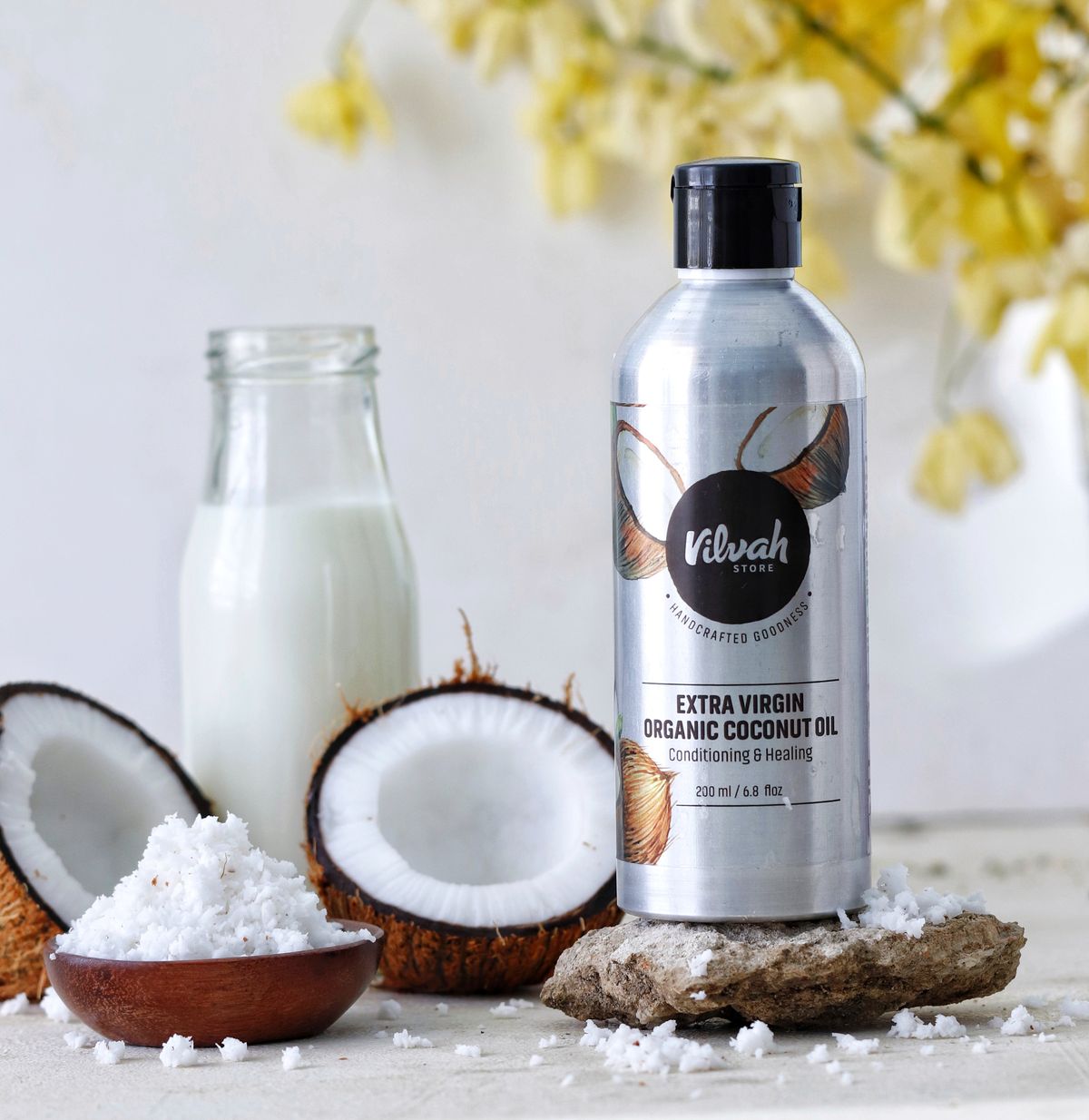
Why it wins: It hits every mark that matters — USDA-organic, cold-pressed, extra-virgin, non-GMO, and a single pure ingredient. The flavor is mild and clean, so it’s lovely in baking and on skin yet still comfortable for a 15-minute oil pull. One big 32 oz jar lasts months and replaces several products at once, which makes it excellent value despite the quality.
- Type: Extra-virgin (unrefined)
- Size: 32 fl oz value jar
- Purity: 100% pure, organic
- Process: Cold-pressed, non-GMO
- Best for: Cooking, skin, hair, pulling
- Certifications: USDA Organic
- ✅ Organic & unrefined — keeps natural nutrients
- ✅ Mild, versatile flavor — kitchen and body
- ✅ Big value jar — lasts for months
- ✅ Single ingredient — non-GMO, cold-pressed
- ✅ Trusted brand with thousands of top reviews
Check the latest price & reviews on Amazon. Price and availability can change.
Best for: anyone who wants one clean, organic, do-it-all jar for the kitchen and the bathroom.
🤝 Affiliate disclosure: As an Amazon Associate we earn from qualifying purchases. If you buy through our links, we may earn a small commission at no extra cost to you. We only recommend products we’d genuinely use.
The Best Coconut Oils of 2026, Compared
Here’s the full line-up at a glance. Each one is the winner in its category — pick the row that matches how you’ll use it most.
| Product | Best for | Type | Why we like it | Buy |
|---|---|---|---|---|
| Nature’s Way Organic EV | Best overall | Extra-virgin | Clean, organic, do-it-all jar | Check on Amazon |
| NaturaleBio Organic Virgin | Best big-jar value | Raw virgin | Large jar, great price per oz | Check on Amazon |
| Everyday Virgin Coconut Oil | Best budget | Virgin | Solid quality, lowest cost | Check on Amazon |
| 365 by Whole Foods Refined | Best for high-heat cooking | Refined | Neutral taste, high smoke point | Check on Amazon |
| Nutiva Organic MCT Oil (C8/C10) | Best for coffee & energy | MCT | Liquid, mixes into drinks | Check on Amazon |
| Fractionated Coconut Oil | Best for skin & hair | Fractionated | Odorless, non-greasy carrier | Check on Amazon |
Best Coconut Oil for Each Need
Still deciding? Here’s a quick mini-review of each category winner so you can match the oil to your goal.
🥇 Best Overall — Nature’s Way Organic Extra-Virgin
Reviewed in full above. It’s the balanced choice: organic, unrefined, mild, and versatile enough for the kitchen and body alike. If you only buy one coconut oil, buy this. Check the price on Amazon.
💰 Best Big-Jar Value — NaturaleBio Organic Virgin
If you cook with coconut oil often or use it daily for skin and hair, a bigger jar saves money. NaturaleBio’s raw, cold-pressed virgin oil delivers organic quality at a friendly price per ounce, so heavy users don’t feel guilty being generous. Same clean, single-ingredient profile — just more of it. Check the price on Amazon.
🏷️ Best Budget — Everyday Virgin Coconut Oil
On a tight budget? You don’t have to sacrifice much. This everyday virgin oil keeps the unrefined benefits at the lowest cost, making it a smart pick for first-timers who want to try coconut oil without committing to a premium jar. Great for beginners and big families. Check the price on Amazon.
🍳 Best for High-Heat Cooking — 365 by Whole Foods Refined
For searing, roasting, and frying, you want a refined oil with a neutral taste and higher smoke point — and you don’t want coconut flavor sneaking into your stir-fry. The 365 refined oil is cleanly processed, affordable, and reliable, which is why it’s a kitchen staple. Learn more in our coconut oil for cooking guide. Check the price on Amazon.
☕ Best for Coffee & Energy — Nutiva Organic MCT Oil
MCT oil stays liquid and blends smoothly into coffee, smoothies, and dressings for a quick energy boost. Nutiva’s organic C8/C10 MCT oil is a clean, well-reviewed option for anyone doing “bulletproof” style coffee or looking for a fast-burning fat. Start small — a teaspoon — to let your stomach adjust. Check the price on Amazon.
💆 Best for Skin & Hair — Fractionated Coconut Oil
Fractionated coconut oil is liquid, odorless, and non-greasy, so it spreads easily and won’t stain — ideal as a carrier oil for essential oils, a massage oil, or a lightweight moisturizer. If you mainly want coconut oil for beauty rather than food, this is the most pleasant to use. See how in our coconut oil for skin and coconut oil for hair guides. Check the price on Amazon.
The “best” coconut oil isn’t a single product — it’s the right grade for the job. Match virgin, refined, MCT, or fractionated to your goal and you’ll never overpay for the wrong oil.
How to Read a Coconut Oil Label
Marketing on the front of the jar can be misleading. Flip it over and check these words — they tell you what you’re really getting.
- “Virgin” / “extra-virgin”: unrefined, from fresh coconut. Good for everyday use. (Note: for coconut oil, “virgin” and “extra-virgin” aren’t legally standardized — they broadly mean the same thing.)
- “Cold-pressed”: pressed without high heat, better for preserving nutrients.
- “Refined”: neutral and higher smoke point — choose this for high-heat cooking, not for skin or pulling.
- “Expeller-pressed”: a chemical-free way to refine — a good sign on a refined oil.
- “USDA Organic” / “Non-GMO”: third-party assurance of cleaner sourcing.
- Avoid: “hydrogenated,” “partially hydrogenated,” or added flavors and fillers.
Coconut oil keeps best in glass. If you plan to store a jar for many months, a glass container avoids any plastic taste and is easy to clean and reuse.
How to Store Coconut Oil (So It Lasts)
Coconut oil is remarkably shelf-stable thanks to its saturated fats — unrefined jars often last two years or more. Keep it simple:
- Store cool and dark — a pantry shelf away from the stove is perfect.
- Use a clean, dry spoon — water and food crumbs are what cause spoilage.
- Don’t panic about melting — coconut oil turns liquid above about 76°F (24°C) and solid below. Both states are fine; it’s not gone bad.
- Refrigeration is optional — it just makes the oil rock-hard and harder to scoop.
If the oil ever smells sharp, sour, or “off,” or looks yellow and chunky, it’s time to replace it — but that’s rare with proper storage.
Coconut Oil Buying Mistakes to Avoid
- Buying refined for skin or pulling.
✅ Fix: Use virgin for the body; save refined for the frying pan. - Paying premium prices for tiny jars.
✅ Fix: Compare price per ounce; big jars are usually far cheaper. - Falling for “flavored” blends.
✅ Fix: Buy pure, single-ingredient oil and add your own flavors. - Ignoring the process.
✅ Fix: Look for cold-pressed (virgin) or expeller-pressed (refined), never chemically bleached. - Assuming pricier means better.
✅ Fix: A mid-priced organic virgin oil beats many “luxury” brands.
Coconut oil is high in saturated fat. It’s a fine part of a balanced diet used in moderation, but it isn’t a “superfood” cure and shouldn’t replace medical advice. If you’re watching cholesterol, talk to your doctor about how much saturated fat fits your plan. See our full wellness disclaimer.
Frequently Asked Questions
What is the healthiest coconut oil?
For most uses, an unrefined, organic virgin coconut oil is considered the healthiest because it keeps the natural nutrients and skips chemical processing. For very high-heat cooking, a cleanly refined oil is the practical choice.
Is organic coconut oil worth it?
If the price difference is small, yes — organic certification means stricter sourcing and no synthetic pesticides. It’s an easy upgrade for something you’ll eat and put on your skin.
Virgin or refined coconut oil — which is better?
Neither is universally “better”; they’re for different jobs. Virgin is best for skin, hair, pulling, and light cooking. Refined is best for high-heat frying and recipes where you don’t want coconut flavor.
How long does coconut oil last?
Stored cool and dry, unrefined coconut oil commonly lasts about 18–24 months, and refined a bit less. Check the best-by date and replace it if it smells sour.
Can I use cooking coconut oil on my skin and hair?
Yes — a pure virgin coconut oil works on skin, hair, and in the kitchen. That versatility is exactly why our top pick is a virgin oil. For a lighter, non-greasy feel on skin, a fractionated oil is nicer.
Which coconut oil is best for weight goals?
Some people use MCT oil for a quick energy source, but coconut oil isn’t a magic weight-loss tool. See our honest look at coconut oil and weight loss.
Your Quick-Buy Checklist
- Decide your main use: cooking, skin/hair, coffee, or pulling
- Pick the grade: virgin, refined, MCT, or fractionated
- Look for 100% pure, single ingredient
- Prefer cold-pressed & organic for everyday use
- Choose refined + high smoke point for high-heat cooking
- Compare price per ounce, not just jar price
- Avoid hydrogenated oils and added flavors
- Store it cool, dry, and sealed
The Bottom Line
The best coconut oil for 2026 is the one that matches your main use. For nearly everyone, a clean organic virgin oil like Nature’s Way Organic Extra-Virgin is the smartest single buy — it covers cooking, skin, hair, and oil pulling in one jar. Cook at high heat a lot? Add a refined oil. Love bulletproof coffee? Grab an MCT. Mostly using it for beauty? A fractionated bottle feels best. Choose the right grade and you’ll get more value and better results every time.
👉 Coconut oil for cooking · Coconut oil for skin · Coconut oil for hair · Coconut oil pulling · Take the 60-second oil quiz